(Photo by Jakub Porzycki/NurPhoto via Getty Images)
Huawei is back with a new flagship smartphone, if rumors are to be believed.
Leaker Steve Hemmerstoffer (OnLeaks) revealed a render of the Huawei P50 Pro, the Chinese manufacturer's latest smartphone, Android Police reports. It's similar in many ways to the Huawei P40, especially in size. Hemmerstoffer claims that the P50 Pro will feature a "massive" 6.6-inch display with a 159mm x 73mm chassis. With thin bezels and a curvy profile, it looks much like the Huawei family of phones before it.
It appears there won't be a dual front camera array with the P50, just a single hole punch camera. Hemmerstoffer claims there will no longer be a magnetic earpiece speaker system with the P50 either; it will instead come with a standard setup.
It's unclear which chip will power the new smartphone. Amid the US trade ban, Qualcomm received a license on Nov. 13 to sell "a number of products, which includes some 4G products," to Huawei, but that does not cover 5G chips. Huawei had largely relied on in-house Kirin chips for its range of flagship phones and Qualcomm's Snapdragon processors for its cheaper models, but Huawei said over the summer that it was running out of processors due to US sanctions.
Huawei became the world's top smartphone vendor in Q2, largely because the pandemic depressed smartphone demand across the globe, but Samsung reclaimed its place at the top in the third quarter.
It is now clear that the fallout from the latest U.S. sanctionsagainst Huawei will reshape the global smartphone industry in 2021, impacting Google, Samsung and Apple, potentially giving China more influence over the global technology sector than it has ever had before. Put simply, the downside risks from America blacklisting one of the world’s largest smartphone makers are now becoming very real.
While there are no tears being shed at Huawei HQ in Shenzhen for Donald Trump’s imminent departure from the White House, there is not yet any cause for optimism either. Huawei has fought the blacklist for the best part of two years, and it remains unclear exactly what size and shape of business will survive.
Huawei denies any cyber ties to Beijing and there is still no substantive, public domain evidence of genuine backdoors in its 5G equipment, but it is reasonable to suggest that western countries buying critical telecoms infrastructure from a privately owned Chinese company is a potential security risk. It is no surprise, therefore, that Huawei’s 5G business has been decimated in key export markets by America’s blacklist.
While the latest unconfirmed rumors suggest it may have more of a stockpile of those in-house Kirin chips than previously thought, analysts are forecasting a steep enough drop in 2021 smartphone sales to remove the company from the top tier of manufacturers, made worse by the divestment of its Honor brand and unsavable by sales at home in China given that shortage of chipsets.
MORE FOR YOU
There was never any real downside risk in the U.S. campaigning for international bans on Huawei’s (and ZTE’s) 5G equipment sales, whether core network or just radio systems. The only fallout was the limited competitor set and the capacity of Nokia and Ericsson to step up, and others such as Samsung and NEC to step in. Yes, the cost to rip and replace Huawei equipment is substantial, and Huawei’s competitors inevitably fear a Chinese backlash, but it’s fair to assume that Huawei’s global 5G equipment dominance will not be restored.
The smartphone situation, though, is a very different matter. The downside risk here for the U.S. is substantial, and the fallout from Huawei’s turmoil is a major risk for western tech giants and America’s dominance of the global mobile standards for software and services.
As I commented back in June 2019, a month after Trump’s blacklist came into force, forcing Huawei into a corner risks “an alternative ecosystem… that does not rely on U.S. hardware or software and which breaks Google's monopoly in particular. The economic implications for the U.S., if this was to take hold, would be stark.” This is now in play. Huawei has quietly confirmed that its Harmony OS will be made available to other smartphone makers, and it has said that it intends to beat Android and create a third global mobile ecosystem.
Huawei is now embarking on the development of search and mapping, its own wider app store and development community, news dissemination and information services. As I’ve argued before, all this raises a very serious question about a Chinese entity controlling the provision of information to millions of people in the west. This risk of censorship and influence on the narrative on key stories one of the more realistic arguments against TikTok. There is also the question on data collection and analysis. Google derives extraordinary levels of insight across the world through the use of its Android software and services.
Huawei is keeping its options open for the moment. Maintaining its development roadmap for new smartphones while driving its opensource ecosystem and soliciting partners. Prior to the chipset ban, Huawei’s strategy had seemingly been to replicate Apple’s approach, to control its hardware, software and services. “We are one of only two companies globally that can have this hardware and software solution for our own ecosystem,” Huawei’s U.K. consumer boss told me last year. “Only Huawei and Apple can do this—it’s our long-term strategy—we are committed to our investments, our ecosystem… This strategy will work.”
But the chipset ban threatens to kill that strategy—if there’s no guarantee of future premium in-house smartphones, then it doesn’t work. Huawei’s ecosystem places its smartphones at the center of a user centric IoT web. Replicating Android’s opensource approach was the natural evolution, seeking other smartphone makers as a fallback.
Somewhat ironically, the biggest threat to Huawei’s strategy is not Apple or Samsung or Google, it’s the other leading Chinese smartphone players. And this brings us to the second Chinese threat to the global smartphone status quo. Xiaomi, Oppo and Vivo have embarked on “new Huawei” strategies, seeking to replicate the blisteringly successful recipe of taking premium hardware at discounted pricing into key markets to beat Samsung and Apple.
Make no mistake, these exceptionally well funded Chinese brands have every chance of repeating Huawei’s trick. Xiaomi and Oppo have each now secured around 13% of global shipments, both could outsell Apple in 2021, Xiaomi might even take a run at Samsung if its internal forecasts are to be believed. To complicate matters, Oppo is part of Chinese conglomerate BBK, which counts the Vivo, RealMe and OnePlus brands in its stable. Taking all these brands together—albeit they claim independence from one another, BBK will overtake Samsung with ease.
The Huawei recipe is enabled by Android. None of those other Chinese smartphone makers have been hit by Huawei-style U.S. sanctions, they retain access to full-fat Android outside China (where the software itself is banned). Absent that, their ability to ramp up market share would be hugely diminished. If Huawei cannot restore its manufacturing capacity—notwithstanding that its blacklisting has made the market more competitive—and given that it’s hard to see how it will switch its domestic rivals from Android in overseas markets, it’s difficult to see how the ecosystem play will strip significant market share from Android.
And so, all eyes on Biden and the inevitable lobbying from the U.S. tech sector after January 20th. The reality is that Huawei would not have been targeted by such extreme measures if it was simply a smartphone and consumer products player. The irony is that it was these non-threatening business areas that were driving its growth and profitability pre the blacklist. If the U.S. can find some way to delineate Huawei’s access to chipsets and U.S. tech between 5G and consumer, it’s clear that the best thing for U.S. tech dominance of mobile standards would be to return Huawei to Android and limit the damage from its alternative OS.
But then we have the politics. America’s more hawkish China watchers are waiting for any sign of Biden softening on Huawei as a litmus test as to wider attitudes to Beijing. The risk is that this becomes a political trap. The trick will be for the U.S. to bank the win on 5G and concede the non-threatening consumer gadgets, the phones, laptops, tablets and wearables. All of which might see the dismantling of Huawei into mini-Huaweis—a consumer business free to export at will, perhaps the same for cloud, automotive and enterprise, then a 5G business restricted by a U.S. stranglehold.
Putting aside the cybersecurity concerns that prompted the U.S. to target Huawei, the launch of its new OS and the concerted export plays from its key domestic rivals is all part of a loosely managed strategy in Beijing to challenge America’s technology dominance, to build a more independent ecosystem in China and to challenge U.S. players across the world. The Chinese threat to the established mobile ecosystem is now very real and the west will need to counter China’s long game. The Huawei blacklist has changed the mobile landscape—the west’s next moves are critical.
Rocks and hard places. No easy answers. If 2020 was a huge year for Huawei and the fallout from its battle with the U.S., it looks like 2021 may be even more of a rollercoaster ride.
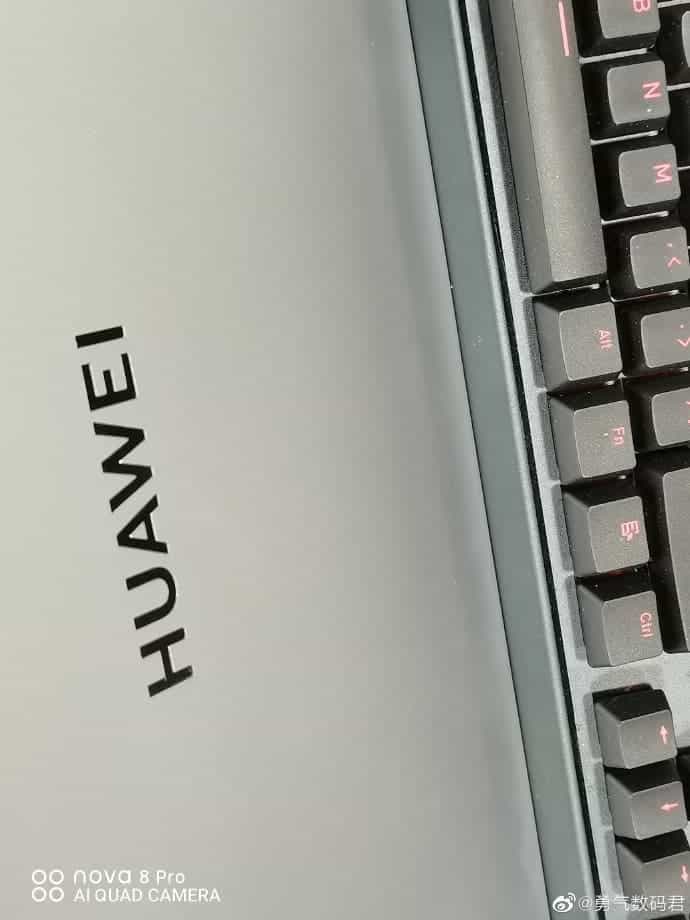
According to recent reports, Huawei will hold a new notebook product launch. There are speculations that it will launch two mainstream high-end models in the MateBook 13/14 series. While Huawei’s smartphone market is suffering as a result of the U.S. ban, it has no effect on its PC market. In the past few months, Huawei has been putting a lot of effort into its PC market.
As of now, there is not much information regarding the upcoming MateBook. There are reports that it will continue the design of the MateBoo 13/14 series. Furthermore, there may be an internal upgrade to the 11-generation Core and MX 450 configuration.
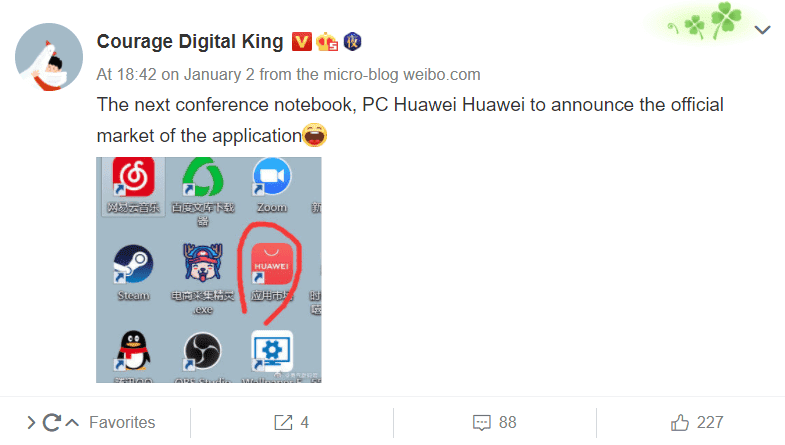
The company is also developing its App Store for desktop. Towards the end of last month, Huawei launched the Huawei App Store for PC. This store has five major sections including “Explore”, “Office”, “Classification”, “Management” and “Settings”. Furthermore, there are sub-sections like “Necessary for Installation”, “New Products of the Week” “Monthly Selection”, “Efficient Work”, “Video Entertainment”, “Design Zone”, etc.
As we all know, Microsoft’s official application market is in vain. Most software needs to be downloaded from the official website by users. For some novice users, they accidentally open a fake link and install some bloatware.The launch of the Huawei App Store will greatly facilitate app download on the desktop.
The first HarmonyOS smartphone may not be Huawei P50
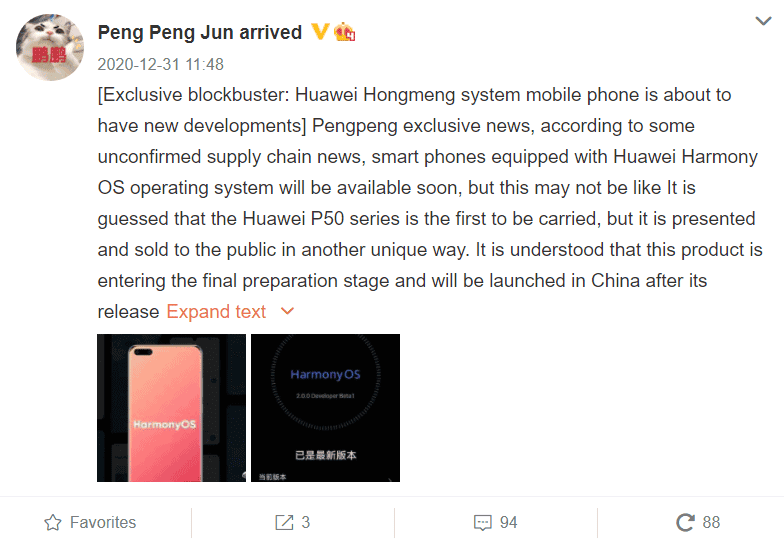
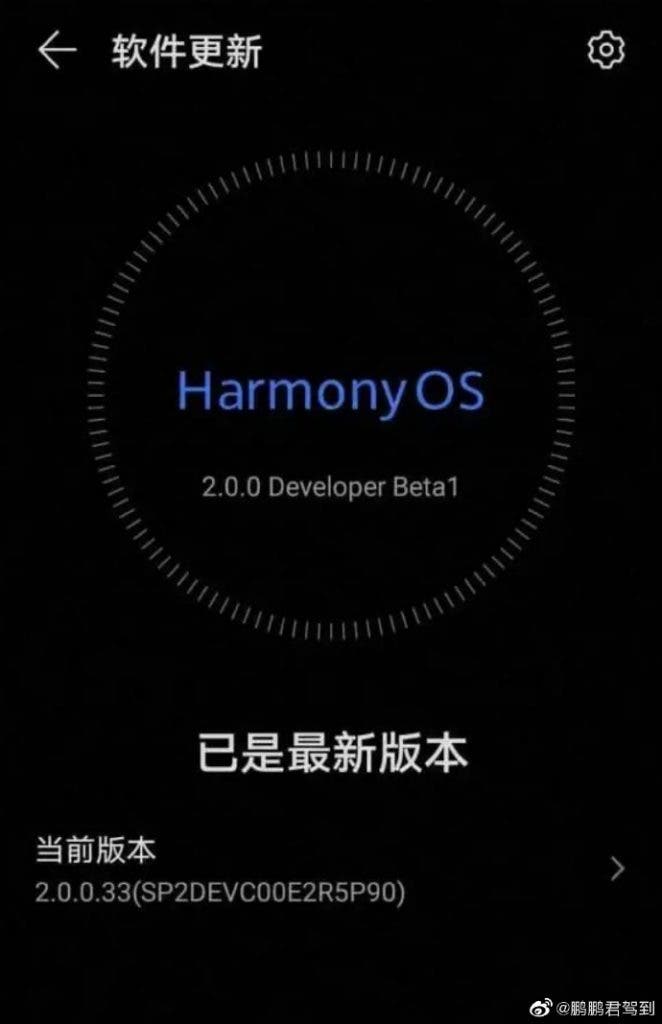
This year, Huawei will launch a batch of new smart devices including its first mobile phones pre-installed with HarmonyOS. Now, there is news that the first mobile phone with HarmonyOS may not be the Huawei P50 as everyone expects. According to a Weibo source (@鹏鹏君), an HarmonyOS smartphone will arrive soon. However, this device may not be the P50 and it will have unique sales.
According to the report, this device is about to enter the final production stage. After its release, this phone will be available via various sales channels such as Huawei offline stores. Of course, the performance of this smartphone is worth looking forward to.
Earlier reports showed that Huawei will launch the Huawei P50 in the first quarter of 2021. The earlier speculations also claim that the Huawei 50 will be the first to use the HarmonyOS 2.0 operating system. However, considering the current report, we are not so sure now.
In order to complete the development, Huawei has launched the HarmonyOS 2.0 mobile beta for developers in mid-December 2020. At the same time, the company is also opening the recruitment of the HarmonyOS 2.0 mobile test version of Huawei P40, Mate 30, and MatePad Pro devices.
For now, the company limits the testing scope of HarmonyOS 2.0 to China. This means that it is HongmengOS 2.0 that is in testing. This is because HongmengOS 2.0 is the Chinese version of HarmonyOS 2.0. We expect that the first HarmonyOS smartphone will initially be for Chinese consumers and it may take some time to enter the global market.
Even with its ongoing Android and Google software woes, Huawei continues to push out some top-quality smartphone hardware, and we've now got our first look at the next flagship phone we're expecting from the Chinese company.
Unofficial renders of the Huawei P50 Pro have been posted by regular leaker @OnLeaks, and while they don't reveal too much in terms of the phone's design, it looks as though we're in for another very polished Huawei handset.
We also have some details on the screen and dimensions of the Huawei P50 Pro: it's apparently going to come with a 6.6-inch display, with an overall size of 159 mm by 73 mm (6.3 inches by 2.9 inches).
No doubt you're wondering how that compares to the Huawei P40 Pro from last year – that phone came with a 6.58-inch display, and measured 158.2 mm x 72.6 mm, so it looks as though this year's edition is going to be almost exactly the same size.
(Image credit: @OnLeaks / The Voice)
We can be pretty sure of the accuracy of this render given the reputation of @OnLeaks, but there's only a front view of the phone for now. It looks as though the power and volume buttons are on the right of the handset from the user's perspective, as normal.
Although the screen isn't on, it's possible to just about make out a single punch hole cut-out for the selfie camera, so it doesn't appear that we're going to get a dual-lens forward-facing camera like we did with the P40 Pro.
We haven't heard too much about what to expect from the Huawei P50 Pro or the Huawei P50 as yet, but if Huawei follows the same schedule as 2020, then the pair of flagship handsets should be showing up around March time. We might also see a Pro Plus model.
Questions remain over how Huawei is going to source components for these phones considering its ongoing problems with doing business with companies from the US, but no doubt we'll hear more in the way of leaks and rumors over the next few months.
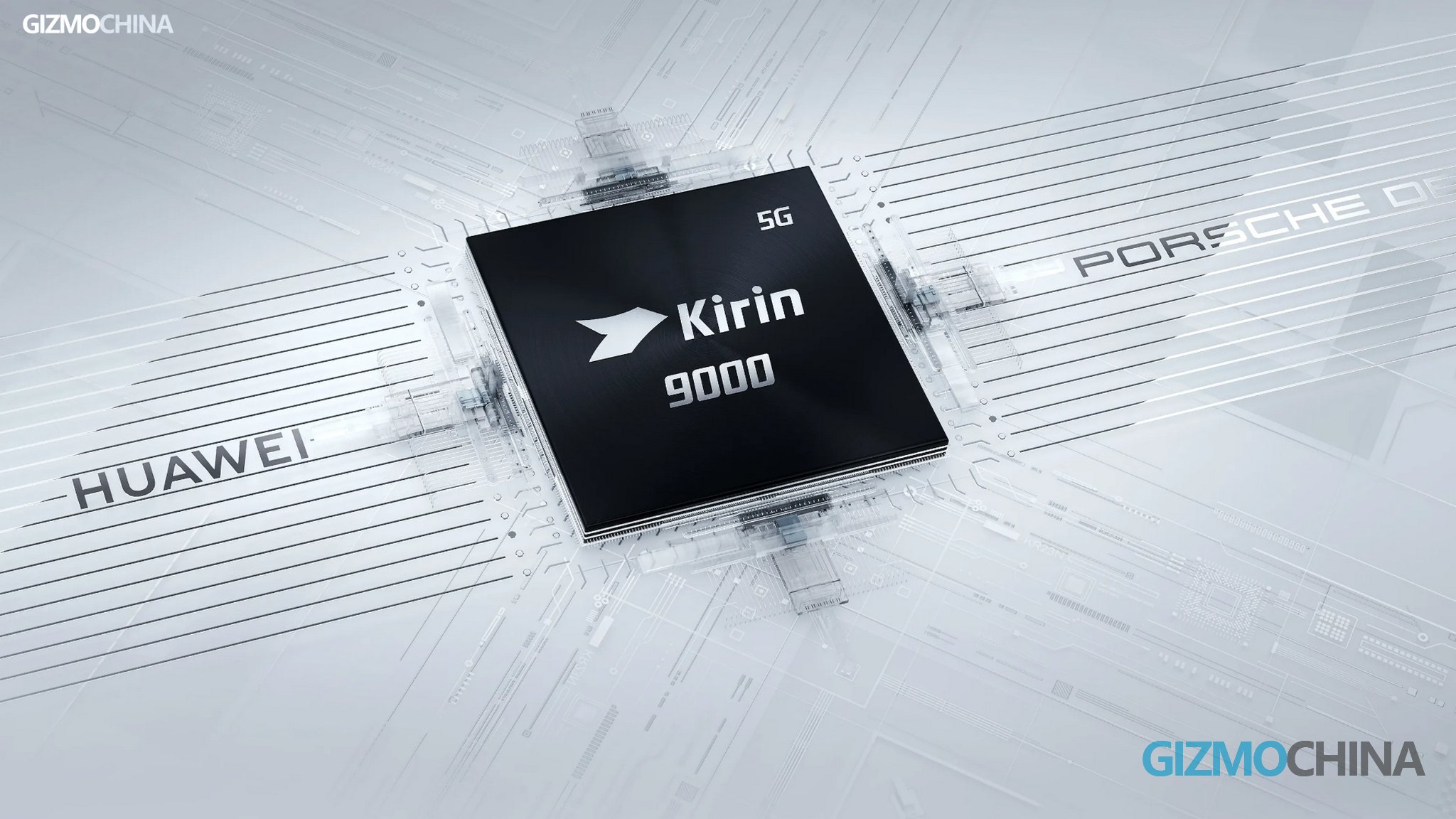
It has just been a few months since Huawei announced the Kirin 9000 processor. The chipset comes in two variants – the Kirin 9000 and Kirin 9000E – and is found only in the Mate 40 series. Now, a leaker has disclosed details about the next flagship Kirin processor which has been reported to be called the Kirin 9010.
The info about the new Kirin processor comes from the leaker @RODENT950, and according to a tweet posted today, the next-gen Kirin processor should arrive as the Kirin 9010 and it will be a 3nm chipset.
The Kirin 9000 launched as the first 5nm processor for Android devices and after its announcement came the Samsung Exynos 1080 and the Qualcomm Snapdragon 888. While most people will expect Huawei to stick to the 5nm process for at least two years, this leak reveals it is making the jump to 3nm for its next mobile chipset, which if all goes well, should launch this year and possibly appear in the Mate 50 series by the fourth quarter.
We won’t be wrong to presume that other chip manufacturers such as Qualcomm will follow suit and also switch to 3nm for their next-generation flagship chipset if the news about Huawei’s 3nm chipset is true. Though the San Diego-based company is expected to announce a Snapdragon 888 Plus chipset later this year which should be a 5nm processor like its sibling but with a higher clock speed.
Samsung, on the other hand, has been reported to be skipping the 4nm process and jumping to 3nm. Apple is also expected to announce 3nm processors that will be built by TSMC but it is not expected to arrive until 2022. So there is a chance Huawei may be the first manufacturer to announce a 3nm chipset
Prior to the release of the 5nm Kirin chipset, there were reports that the Mate 40 may be the last Huawei flagship to be powered by a Kirin chipset processor but that will likely not be the case. The Huawei P50 phones are expected to come with Kirin 9000 processors and if Huawei is able to pull it off, then this year’s Mate series will come with the 3nm Kirin 9010.