FILE – In this July 15, 2020, file photo, visitors wearing masks to curb the spread of the coronavirus look at the latest products at a Huawei store in Beijing. China accused Washington of damaging global trade with sanctions that threaten to cripple tech giant Huawei and said Tuesday it will protect Chinese companies but gave no indication of possible retaliation. (AP Photo/Ng Han Guan, File)
PARIS (AP) — French President Emmanuel Macron says France is not excluding Chinese telecom giant Huawei from its upcoming 5G telecommunication networks but favors European providers for security reasons.
The French leader spoke after meeting with visiting Chinese Foreign Minister Wang Yi in Paris on Friday.
Macron said he had already told Chinese President Xi Jinping about his preference for companies such as Ericsson and Nokia, saying “you would do the same as me.”
“It’s normal that … we want a European solution” because of the importance of “the security of our communication,” Macron told reporters.
France’s information security agency ANSSI said last month that Huawei Technologies Ltd. will not be banned from France, but French telecoms operators that buy its technology will only be able to get licenses limited to eight years. The French government has said it will restrict Huawei’s 5G technology to protect military bases, nuclear installations and other sensitive sites.
Huawei is at the center of a major dispute between Washington and Beijing over technology and security. U.S. officials say Huawei is a security risk, which the company denies, and are lobbying European and other allies to avoid its technology as they upgrade to next-generation networks.
China, meanwhile, is trying to encourage Europeans to guarantee access to their markets for Chinese telecom and technology companies.
On Aug. 17 the Commerce Departmentunexpectedly announcednew restrictions on Huawei’s ability to buy semiconductor chips—electronic circuits that store computer data. These measuresprohibitall firms from selling any chips made with U.S. technology to Huawei, regardless of whether the chips are tailored to Huawei’s user specifications. The changes also extend the sales ban to transactions in which Huawei is not the immediate purchaser but is the “end-user” or “ultimate consignee.” Analystswidely seethese latest rules as, for the first time, imposing a “blanket ban” on semiconductor sales to the company. According to Commerce Secretary Wilbur Ross, the rule change isaimedat halting China’s “evasive measures” to bypass previous restrictions.
President Trump’s administration has imposed numerous restrictions on Huawei’s purchases of American technology, though until now, each has included significant loopholes. The United States firstplacedHuawei on a trade blacklist in May 2019; however, this ban was implemented only partially and did not affect most foreign-produced chips. This past May, Washingtonextendedthe ban to cover all semiconductors made both with U.S. technology and according to Huawei’s specifications. Under this rule, though, Huawei could stillpurchasechips with generic designs, sold off-the-shelf. It could alsobuyany chips sold through third-party distributors when the original seller did not know of the chips’ intended end use.
The latest Commerce Department rules, however, close both of these loopholes. And, because American technology iswidespreadin the global semiconductor industry, the new rules likely cover the vast majority of semiconductors made outside China.
The Trump administration’s clampdown could inflict serious harm on Huawei, perhaps even jeopardizing its role as a major global producer of 5G technology. Because Chinese producers’ semiconductor manufacturing capabilities currently lag those of foreign companies, some industry expertsconcludethat the new rules “put[] Huawei’s survival at risk.” One investment analystwritesthat “[t]he company is probably finished” as a 5G producer “once its inventories run out early next year.” To be sure, previous Commerce Department restrictions have also hurt Huawei. Earlier this year, Huawei’s earnings growth fellbelow expectationspartially due to the U.S. blacklist. And after last May’s restrictions, company officialsexpressedconcern over Huawei’s “survival.” The effects of the August rule change, however, will likely be much greater.
Beyond Huawei, the Commerce Department rules could significantly impact other tech companies that sell to Huawei. Some American semiconductor companies have already condemned the changes, believing that the new rules will cut into their profits. The American Semiconductor Industry Association, for instance, released astatementdescribing the new rules as overly broad for national security purposes and harmful for U.S. companies. Certain foreign manufacturers also stand to lose—such as Taiwan’s MediaTek, which hadearnedlarge profits selling Huawei off-the-shelf semiconductors after last May’s regulation took effect. Some analystsargue, however, that U.S. chipmakers could benefit if Huawei’s market share gets absorbed by other smartphone producers that more regularly buy American products.
Commentatorswidelybelieve that the Commerce Department’s decision will deepen U.S.-China tensions—especially if Huawei’s business is truly jeopardized. The rule change has already prompted heated rhetoric from U.S. and Chinese officials. Vice President Mike Pencepraisedthe Commerce Department’s rules, slamming Huawei as an “arm of the Chinese Communist Party’s surveillance state.” China, meanwhile,referredto the measures as “nothing short of bullying.” One Chinese spokesperson hasstatedthat China, in response, will “take necessary measures” to protect the rights of Chinese companies but did not specify how China would retaliate.
TikTok Sues U.S. Government Over Trump Executive Order
On Aug. 24, TikTok filed asuitin federal court against the Trump administration, alleging that the president’s executive order to prohibit U.S. entities from engaging in transactions with TikTok—set to take effect in the next few weeks—was unconstitutional. The lawsuitcomeseven as U.S. companies have entered into talks with ByteDance, TikTok’s Beijing-based parent, to purchase the highly popular video-streaming app.
In their suit, filed in the U.S. District Court for the Central District of California, TikTok and ByteDance advance the following three claims, among others (For a more comprehensive explanation of the various claims TikTok advances in its suit, seethis piece from Bobby Chesney.):
The plaintiffs argue that President TrumpviolatedTikTok’sFifth Amendment due process rights, because his administration offered TikTok no notice or opportunity to be heard in advance of the action.
The plaintiffs argue that the president abused his discretion under the International Emergency Economic Powers Act (IEEPA) by acting in his political interests, rather than seeking to address “an unusual and extraordinary threat,” as required by the statute. The suit alleges that, in response to U.S. government concerns about the company’s data collection practices, TikToktook“extraordinary measures to protect the privacy and security of TikTok’s U.S. user data,” including storing U.S. user data in the United States.
The plaintiffsclaimthat the President demanded that TikTok make a payment to the U.S. Treasury as part of any deal to sell its business to a U.S. company, in violation of the company’s Fifth Amendment rights. The Fifth Amendmentprovidesthat private poverty may not “be taken for public use … without just compensation.”
A 2014opinionfrom the D.C. Circuit Court of Appeals suggests that, under certain circumstances, companies required to divest on national security grounds have a right to be heard—as well as a right to access certain unclassified materials—before the president may issue an order against them. This precedent suggests that a judge may consider any evidence TikTok can marshal to support the claim that regulators did not give the company a chance to make its case. But even if TikTok persuades the court that its due process rights were violated, the president will likely be able to issue a similar executive order after complying with certain procedural safeguards.
TikTok is not likely to succeed in persuading a judge that the president abused his authority under IEEPA (claim 2). Experts havepointed outthat courts are typically reluctant to challenge the president on judgments concerning national security. Even if TikTok can marshal evidence suggesting that it has taken measures to alleviate user concerns about data privacy, a judge is not likely to decide that the company’s precautions compel the president to change his judgment about whether the company poses a threat.
TikTok’s claim concerning “just compensation” (claim 3) may also face an uphill battle. Trumpsaidpublicly that, for any deal that TikTok enters to sell its assets to a U.S. buyer, “a very substantial portion” of the sale price would need to go to the U.S. Treasury. But Trump’sexecutive orderrequiring Bytedance to divest contains no such requirement, and it is not clear that Trump otherwise intends to force Bytedance to pay the U.S. Treasury as part of a sale.
Experts note that while the suit may not ultimately spare the company from divestiture requirements, it couldhelpbuy time. Because Trump’s Aug. 19 order gave the company just 90 days, a later deadline could help the company come to an agreement with potential buyers. The litigation also raises the prospect of delaying a final ruling on the validity of the divestiture order to a date beyond the end of Trump’s term in office, should he fail to win reelection. In other words, while the litigation faces an uphill battle on the merits, TikTok may be hoping the suit buys it time to get a better shake from a different president.
Other News
Reportsemergedthis month that the United States and Israel are nearing an agreement pursuant to which Israel would exclude equipment made by Huawei and ZTE from its 5G network. Such a deal,according toone anonymous official, could be signed “within weeks.” These reports, if true, could indicate that U.S. efforts to sway its allies not to buy from Huawei are continuing to gain traction. Already this July, the United KingdomblockedHuawei products from its 5G infrastructure and ordered that existing Huawei components be replaced; Franceenacteda similar policy in July. Other European nations, such as Germany andItaly, are presently considering prohibitions against the company, though some German policymakers have recentlyexpressedreluctance to ban Huawei products outright. Reporting on the U.S.-Israel agreement has already prompted a strong reaction from China. Chinese commentators have forcefully criticized Israel over the reported development, with one China Daily journalistreferringto Israel as “a U.S. poodle against China in 5G.”
A subsidiary board of the Shenzhen Stock Exchange, ChiNext, adopted new rules this month that let tech companies register more quickly for initial public offerings (IPOs) on the exchange. With the new policies, tech companies cango publicon the exchange without being examined by the China Securities Regulatory Commission. The change will significantly streamline the IPO process for participating Chinese companies. For many tech firms, IPO registrationtook yearsunder the old system, but now companies can register through procedures similar to those in U.S. stock markets. Just after the new rules took effect, 18 companieslistedvia the fast-track procedures and on average experienced post-IPO price appreciations of 212 percent. Commentators havecharacterizedthe regulatory changes as one of China’slatest effortsto promote domestic tech champions and compete technologically with the United States. These reformsfollowprevious steps China took in April to fast-track IPOs on the Shenzhen exchange. And they coincide with a Trump administration effort toforceChinese companies that flout U.S. accounting standards to delist from American stock exchanges.
The Justice Department hasarresteda former CIA operative accused of spying for China. The suspect, Alexander Yuk Ching Ma, allegedlysoldinformation about CIA and FBI officials and tradecraft to Chinese intelligence officials, starting in 2001. The arrestfollowsthe November 2019 conviction of former CIA operative Jerry Chun Shing Lee, who was similarly accused of selling state secrets to China. Between 2010 and 2012, Beijingdismantledthe CIA’s spy network in China by killing or imprisoning more than a dozen U.S. informants. But analystsdisagreeover the extent to which intelligence provided by former CIA officials like Ma and Lee contributed to China’s success in identifying U.S. spies.
Commentary
In the New York Times, Tim Wuarguesthat a ban on TikTok serves as a fair means to correct an asymmetry whereby Chinese companies could access the U.S. market, even as American companies have been blocked in China. For Foreign Affairs, Jane Perlezsaysthat Hong Kong’s national security law represents the end of the one country, two systems model under which China had guaranteed freedom and relative autonomy for the people of Hong Kong. In the Washington Post, John Pomfretwritesthat if Joe Biden wins the 2020 presidential election, he should build on elements of Trump’s China strategy—including standing up to China’s intellectual property theft—while restoring U.S. alliances to resist Beijing’s authoritarianism. The Economistwritesthat Hong Kong’s national security law has already pressured academics at the city’s foremost universities into self-censorship.
For the Atlantic Council, Hung Tran and Barbara Matthewsassessthe pros and cons of China’s new digital currency, which could facilitate more efficient transactions but may remove capital from banks’ balance sheets. The Financial Times editorial boardarguesthat China’s approach to easing its economic downturn has benefited companies but done little for consumers. For Defense One, Steve Ferenzi and Keith Webercontendthat the U.S. defense apparatus must undertake a major redesign to prepare for strategic competition with Russia or China. In the Providence Journal, J. William Mittendorfarguesthat China’s efforts to acquire property from the Canadian government north of the Arctic Circle presents strategic threats to Canada.
ForLawfare, Ashley Deeksunpacksthe ways in which Chinese law firms are deploying “legal tech” with important implications for international law and U.S. foreign policy. Bobby Chesneyunpacksthe claims TikTok advances in its recent suit against the Trump administration. Sean Quirkexploresthe Trump administration’s recent statements and military exercises designed to counter China’s growing influence in the South China Sea. Mark J. Valencia argues that, should Vietnamfilea complaint against China under the U.N. Convention on the Law of the Sea (UNCLOS), the risks may outweigh the benefits. On the Lawfare Podcast, Scott Andersonspoketo Robert Williams, Elsa Kania and Tarun Chhabra about the future of the U.S.-China relationship, as disputes over trade, technology, and the coronavirus spur harsh rhetoric in Beijing and Washington. Bobby Chesneyspoketo Sheena Greitens and Ronald Deibert about Trump’s executive orders targeting TikTok and the role of technology competition in the broader space of U.S.-China competition.
PARIS (AP) — French President Emmanuel Macron says France is not excluding Chinese telecom giant Huawei from its upcoming 5G telecommunication networks but favors European providers for security reasons.
The French leader spoke after meeting with visiting Chinese Foreign Minister Wang Yi in Paris on Friday.
Macron said he had already told Chinese President Xi Jinping about his preference for companies such as Ericsson and Nokia, saying “you would do the same as me.”
“It’s normal that ... we want a European solution” because of the importance of “the security of our communication,” Macron told reporters.
France’s information security agency ANSSI said last month that Huawei Technologies Ltd. will not be banned from France, but French telecoms operators that buy its technology will only be able to get licenses limited to eight years. The French government has said it will restrict Huawei’s 5G technology to protect military bases, nuclear installations and other sensitive sites.
Huawei is at the center of a major dispute between Washington and Beijing over technology and security. U.S. officials say Huawei is a security risk, which the company denies, and are lobbying European and other allies to avoid its technology as they upgrade to next-generation networks.
China, meanwhile, is trying to encourage Europeans to guarantee access to their markets for Chinese telecom and technology companies.
Huawei's P40 Pro - dazzling hardware but is its software a problem?
David Phelan
August 28 update below. This post was first published on August 26,2020.
Huawei smartphones are arguably among the best in the world, with industry-leading cameras, stellar performance, great build quality and design and high levels of innovation. So, is there anything that should hold you back from buying one, in the United States in particular?
Well…
Read on for full details of why you should or shouldn’t go for Huawei.
August 28 update. In the next few days, Huawei holds its annual developer conference (HDC) – similar to Apple’s annual World Wide Developers’ Conference. Last year, at the same event, Huawei revealed its Harmony operating system, and EMUI 10, the company’s software overlay for its Android phones. As discussed below, the same overlay can be put on top Harmony OS-powered phones, so HDC2020 will be of interest for anyone considering buying into Huawei, because it sees the announcement of EMUI 11.
Rumors of what will emerge, coming from tipsters on Weibo and picked up byHuawei Central, indicate there will be a lot of innovations. Some of them centre on the design of the Always On Display found on Huawei’s phones (though the same feature is also on many other Android handsets). Already, the Always-On Display looks rich and colorful on current phones with EMUI 10.1, with 3D clock images and clocks that change color during the day. Expect further developments along the same lines.
It seems there will also be multitasking and multi-window capabilities to improve the current split-screen mode, so you can send messages from a small window while watching video or playing a game on the phone.
In other words, expect Huawei to come out fighting at HDC on September 10, to further insist that EMUI 11 and Harmony OS are strong, capable alternatives to Android and Google Mobile Services. EMUI 11 will then become available for compatible handsets, and will come pre-installed on the company’s next phones to be launched, theHuawei Mate 40 series. Now, back to whether or not you should go for Huawei.
What’s up between the U.S. Government and Huawei?
More than a year ago, the Trump Government put Huawei on an Entity List, preventing U.S. companies from having business deals with the Chinese manufacturer. Huawei not only makes great phones, but class-leading 5G infrastructure. However, successive countries have now said that this infrastructure should not be built by Huawei. These include the States, Australia, New Zealand and, by implication, Canada which hasn’t said no, but has declined to make a decision for so long that Canadian networks are taking no chances and opting for hardware from Ericsson or Nokia instead.
The U.K., having previously welcomed Huawei to take a limited role in its 5G system has changed its mind, requiring all Huawei 5G equipment to be removed by 2027.
The U.S. Government’s beef is that Huawei is under the thumb of the Chinese Government, though Huawei has always denied this, along with any allegations of using its products to spy on other countries. And indeed, there is no evidence it has ever done so.
Since Google’s Android phone operating system comes from a U.S. company, does that mean Huawei phones can’t have it?
Actually, there’s more to it than that. Android is open-source, so Huawei phones can, and do, have that OS on them. But what’s not open-source, and no longer available to Huawei phones, is Google Mobile Services.
What does that mean, and where does it leave Huawei?
This means that Google Maps, Gmail, YouTube and Google Play Store, for instance, are not available on Huawei’s most recent phones. Since Google Play Store is the main way most Android phone users download apps, it’s the last of those four which is the most serious. After all, Huawei’s own Mail app is very usable and can be configured to work with Gmail accounts, YouTube users can still access the website via their phone and the same for Google Maps which is accessible through the web browser.
Phones which were released before the Entity List came into force do have full-fat Google with access to all these apps. The latest of these is the revised Huawei P30 Pro New Edition.
Most recently, Google has said it won’t be releasing security updates for these phones, though Huawei has said it will continue to support the phones and this will not be a problem. To stress, a Huawei smartphone will continue to work exactly as it does today even without Google support – it ain’t going to turn into an expensive paperweight.
So, the latest Huawei phones don’t have apps?
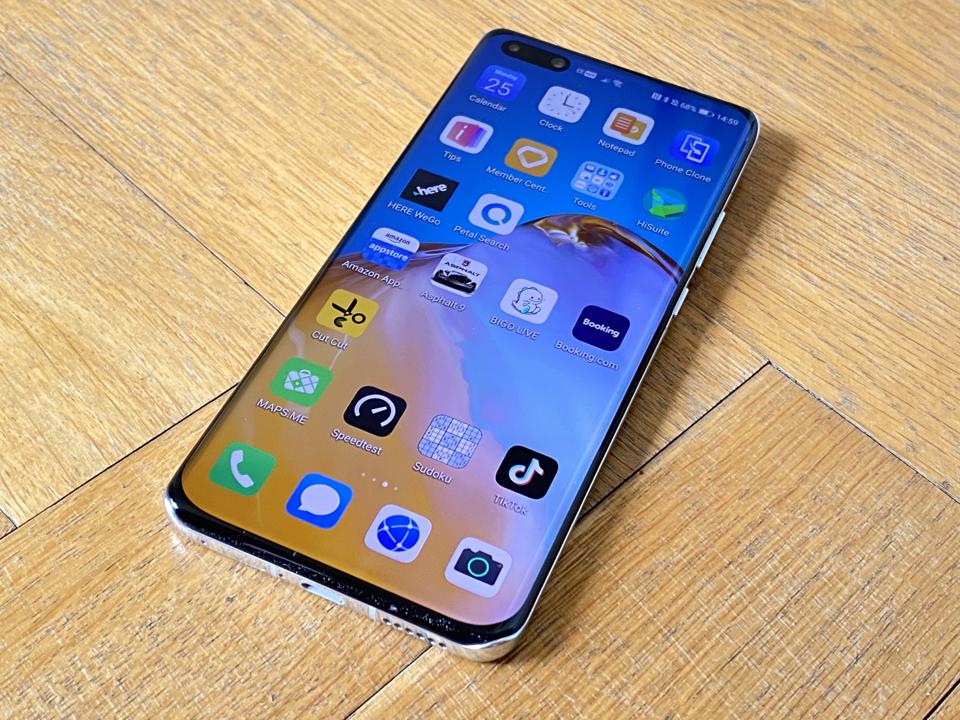
Far from it. First of all, there’s access to Huawei’s own, rapidly-growing app store, called AppGallery. This includes many big-name apps from Tinder and TikTok to Microsoft Office and Snapchat, but currently lacks direct access to Zoom, Twitter, Instagram and other big apps. It does have alternatives in some cases: Here WeGo Maps is arguably better than Google Maps in some ways and anyway, a Huawei Maps app made in conjunction with TomTom is coming.
Huawei also has Petal Search, a pleasantly-named app which scours where you can safely download apps from if they’re not available directly. For instance, if you go to Amazon and download the Amazon App Store app, you have secure access to all the apps available from there, which adds significantly to the 81,000 apps in the AppGallery. You can also download apps like WhatsApp from the WhatsApp website.
In other words, many of the most popular apps are available, but though it’s safe and straightforward to get them, it’s not as simple as going to the Google Play Store.
What about Harmony OS? Is it very different from Android?
Huawei says its own operating system, called Harmony, is much more efficient and faster than Android. It’s believed it will arrive on Huawei phones later this year, which may signal the end for Huawei Android phones.
In terms of how it feels, it’s likely that phone users won’t spot too much of a difference. That’s because the company’s own EMUI (short for Emotion User Interface) is currently on all Huawei phones, just as all manufacturers put their own spin on Android.
But EMUI is designed so it will look identical on a phone with Harmony OS underneath, so there should be a smooth and seamless move from one OS to the other. So smooth that customers might not even notice.
Like Android, Huawei’s Harmony OS is based on Linux, so it should be easy for Android app developers to make their apps compatible with Harmony OS, too.
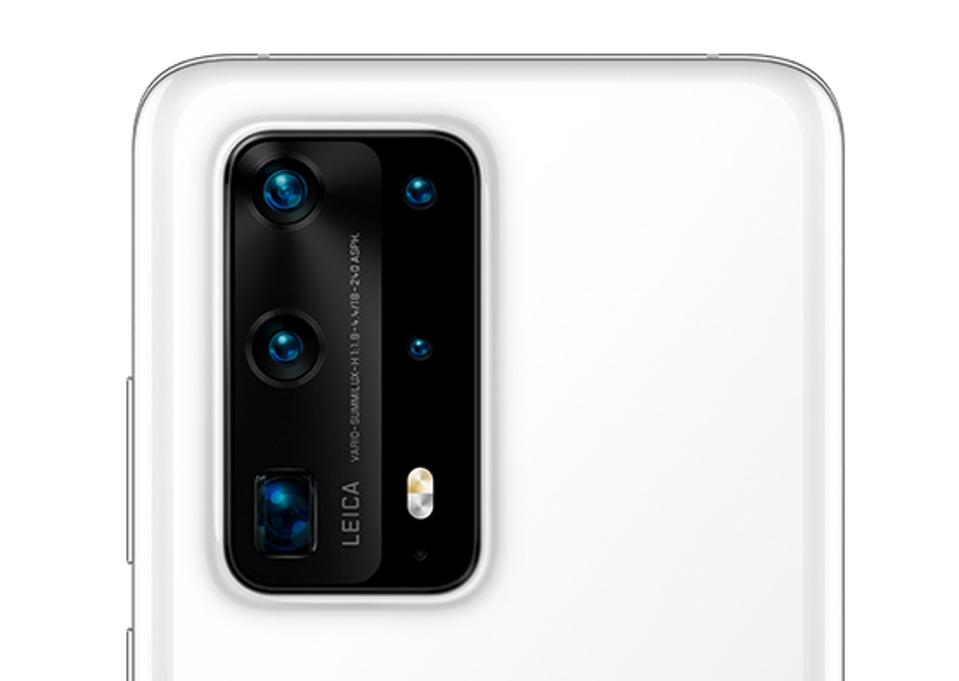
Five rear cameras on the Huawei P40 Pro Plus
Huawei
Is it worth getting a Huawei phone in the United States?
Buying Huawei is certainly a little more complicated than choosing a Google Pixel or Samsung Galaxy phone. But, set against that, the phones are just sensational. I’ve tested a lot of phones and the Huawei P40 Pro is better than almost all of them when it comes to cameras. The Leica lenses, sophisticated Artificial Intelligence in the software and speedy performance means Huawei’s camera are unstoppably good.
Huawei’s own Kirin processors are world-class. Nothing has yet beaten the A13 Bionic chip in the latest iPhones, but the current chips from Huawei are not far behind. And in the coming days, Huawei is about to reveal its latest chip, which is likely to be ground-breaking and very fast indeed.
Huawei was one of the first companies to put the fingerprint sensor in the screen itself, and to add reverse wireless charging so you can charge a friend’s phone from yours. Future Huawei phones look certain to have distinctive innovations – an all-new camera system has already been predicted for the Huawei Mate 40 Pro when it launches in the coming weeks.
In other words, if you buy a current Huawei phone, you can be sure you’re getting hardware that’s about the best around.
But there’s no denying the fact that the AppGallery and its workarounds currently leave gaps in the app ecosystem, so it’s worth checking before you buy that your favorite apps are there.
As for future handsets, well, the new Harmony OS is as yet untested on mobile phones, so we can’t tell just yet how good it will be. If it lives up to Huawei’s assertions, it could be a very serious contender, perhaps a third operating system alongside iOS and Android.
Could the next Huawei phone have a headphone jack?
@RODENT90
August 28 update below. This post was first published on August 26, 2020.
The Huawei Mate 40 Pro is due to be unveiled in coming weeks and the latest rumor suggests a cool, popular extra: a 3.5mm headphone jack. More details at the end of this post, but that’s one of many upgrades which may be coming to the phone.
The Huawei Mate 40 Series of phones, due to be announced in just a matter of weeks, will likely be the last Huawei phones of their kind for two reasons. First, it’s believed that the first Huawei phone to use the company’s own operating system, Harmony OS, could arrive as soon as the end of this year. In which case, could this make the Mate 40 the last phone to use Android at all?
Recommended For You
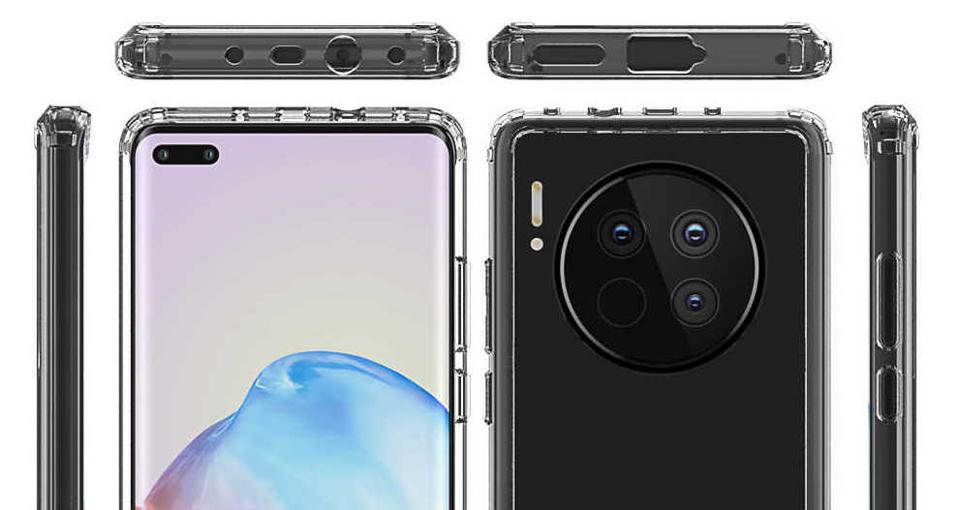
August 28 update. That crowd-pleasing feature, the 3.5mm headphone jack seems more likely than ever, thanks to another leak, this time from Weibo tipster DigitalChatStation, picked up byHuawei Central. New images of TPU cases for Huawei mate 40 Series phones have emerged and they are consistent with the one shown above.
On the Mate 40 specifically, the cut-out in the case where the 3.5mm headphone jack will be accessed is unmistakable. There are also cut-outs for speakers which, interestingly, appear to be both on the top and bottom of the phone. Intriguingly, the cut-out for the camera is apparently bigger than it was on the Mate 30 Pro but the delightful exclamation point flash does not have a cut-out above it in this case. Even the least obtrusive plastic case would likely impact the flash output it there’s no cut-out to clear the path, so this is a slightly surprising aspect. The top edge of the Mate 40 Pro case has different holes, suggesting that it’s the Mate 40 only, and not the Mate 40 Pro which will feature a traditional headphone jack.
What’s also noticeable is that these cases, like the one above, have raised sides. The official Mate 30 Pro case, in contrast, covered the sides of the phone only near the top and bottom extremes, to allow access to the edges of the waterfall display which, in that case, included onscreen volume controls. These cases have covers for a volume rocker, correlating with other rumors that physical volume buttons would make a comeback on the Mate 40 Series.
Back to the other things we’ve learnt so far…
Second, the Mate 40 Series may be the last phones to feature the Kirin processor. Huawei is running through its stockpile of high-end chips fast. The next processor, the Kirin 9000, is set to be announced in the coming days in Berlin, but restrictions by the U.S. Government on companies which supply Huawei mean that once the current stocks have gone, Huawei can’t order more from TSMC, its Taiwanese supplier. The latest leaks show that the Mate 40 Series could be pretty appealing.
There will be four phones
According to leaks, there will be four handsets, the Huawei Mate 40, Huawei Mate 40 Pro and two others, likely the Mate 40 Pro+ and Porsche Design.
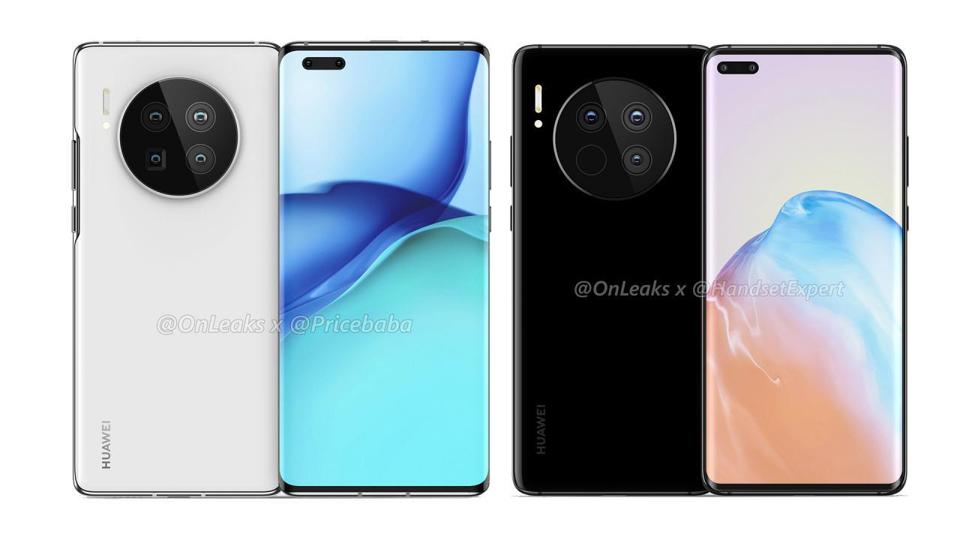
The alleged design for the next Huawei Mate 40 Pro phone.
@OnLeaks, @Pricebaba
The design looks peachy
Take a look at the images which have leaked so far – the most striking of which come from Steve Hemmerstoffer, also known as @OnLeaks. These promise the distinctive circular camera panel which Huawei Mate phones have made their own. Four camera lenses sit in the circle with other sensors such as the flash sitting to one side and looking like an exclamation point – a reflection of the company’s eyebrow-raising year, perhaps.
The lenses sit in a square inside the circle but the details of them are restricted to noticing that the lenses are very different sizes. None seems to be a periscope lens, as found on the P40 Pro+, for instance, but other camera technologies have been rumored to appear on the Mate 40 Pro. And some earlier images showed lenses in different shapes, suggesting a periscope may be among them.
Two big screen sizes
It looks like the Huawei Mate 40 will have a 6.5in display and the other phones will have a different size, 6.78in, according to a tweet from the reliable @RODENT950. The same leaker also claims both sizes of screen will have refresh rates of 90Hz – faster than some but not the fastest available.
Waterfall display
There have already been leaks suggesting that the Mate 40 Series will include phones with waterfall displays, where the image cascades over the long sides.
It looks like the phones will most likely be released in October, though whether Huawei will prioritize its domestic market over international, as seems a strong possibility, is still unclear.
One More Thing
One of the latest rumors shows what might be a cool extra: a 3.5mm headphone jack. Absent from nearly all high-end phones apart from the Sony Xperia 1 II, it looks like Huawei is bringing it back. For clarity, @RODENT90 reckons that’s one of several holes on the top of the phone:
Taiwanese chip designer MediaTek said on Friday it had applied to the US government for permission to continue supplying China's Huawei after new US curbs take effect in mid-September amid rising China-US tensions.
The Trump administration in August expanded its curbs on Huawei and banned suppliers from selling chips made using US technology to the Chinese firm without a special licence.
MediaTek, which analysts said could be among the worst affected following the latest curbs, said it will follow related global trade regulations and has applied for the permission to ship to Huawei after September 15.
"MediaTek reiterates its respect for following relevant orders and rules on global trade, and has already applied for permission with the US side in accordance with the rules," it said in a brief statement, without elaborating.
Huawei declined to comment.
The US move this month closes potential loopholes in its earlier May sanctions that could have let Huawei buy chips using US techonolgy via third parties.
The curbs underscore the growing rift in Sino-US ties as Washington presses governments to squeeze Huawei out, alleging the company would hand over data to Beijing for spying. Huawei denies it spies for China.
Taiwan Semiconductor Manufacturing (TSMC), the world's largest contract chipmaker, said last month it had stopped taking new orders from the Chinese telecommunications and smartphone giant in May and does not plan to ship wafers after September 15.
Which are the best truly wireless earphones under Rs. 10,000? We discussed this on Orbital, our weekly technology podcast, which you can subscribe to via Apple Podcasts, Google Podcasts, or RSS, download the episode, or just hit the play button below.
While Huawei has been growing its market share in its home country China, the company has witnessed a drop in smartphone shipments in the overseas market after the United States banned the company citing security concerns.
However, the major obstacle for the Chinese giant is the recently tightened restriction that has banned the company from procuring and manufacturing semiconductors using American technology or company.
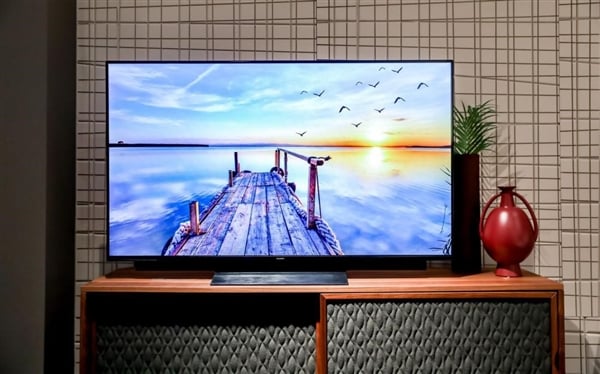
Huawei Smart Screen V55i
The new restrictions could have an impact on its core telecom equipment business as well. Now, a new development hints that the ban has not only affected the company’s smartphone business but also the Smart TV business.
As per the report, Huawei has reduced the order of its components for the TV production by 30 percent to 40 percent. This is because the company has been unable to secure a sufficient supply of chipsets for Smart TVs.
Huawei and its sub-brand Honor both forayed into the Smart TV market last year. The company has been procuring LCD panels for the TV from BOE Technology and China Star Optoelectronics Technology (CSTO). The report adds that the company has been outsourcing the production of TV sets to a BOE subsidiary.
It is also being reported that the company has slowed down the pace of its orders to handset ODMs in Chian. Now, it remains to be seen how Huawei addresses this issue of semiconductor components which is severely impacting the business.