Rechercher dans ce blog

Thursday, June 10, 2021

How America Turned the Tables on Huawei - Voice of America

huawei.indah.link

Excitement over China’s digital advances was rampant when Keith Krach last visited China as chief executive of the highly successful software company DocuSign, with its more than 400 million users in 188 countries.

“I saw a lot of new technology. I saw the drone swarm technology. Everybody was telling me to download Tencent every 30 minutes,” Krach said. Tencent is the multinational conglomerate behind China’s popular WeChat app.

That was in December 2017. Today Krach is near the top of a list of Americans who are banned, along with their close relatives, from ever again visiting China or doing business with Chinese entities.

Former Secretary of State Mike Pompeo “was number one, [former trade policy adviser Peter] Navarro number two, I'm number three" on the list topped by former Trump administration officials, Krach said in a recent interview.

Twenty-eight people were hit with the sanctions, which were announced January 20, minutes after U.S. President Joe Biden was sworn in.

'Shot across their bow'

While the sanctions were focused on those leaving office, Krach said he believed they were meant as a warning to members of the incoming Biden administration, including Secretary of State Antony Blinken and White House Asia coordinator Kurt Campbell.

“That’s a shot across their bow — you know, just enough to make them hesitate — and that makes a difference. For me, it doesn’t affect me. I’m at a different station in life,” Krach told VOA during a recent visit to Washington.

Krach became a U.S. undersecretary of state for economic affairs in March 2019 and stayed on the job until the end of President Donald Trump’s term.

“My charge was to develop an operationalized global economic security strategy to drive global economic growth, maximize national security and combat China’s economic aggression,” he said.

A year into the job, “the issue of 5G became really urgent,” he said. “Huawei had announced that they had 91 worldwide contracts, 47 in Europe. It looked like they were unstoppable, [that] they were going to run the table.”

Krach’s job was to turn the table.

FILE - Information on Huawei's 5G equipment is seen on a screen at the World 5G Exhibition in Beijing, China, Nov. 22, 2019.

The United States started warning allies and partners in 2019 that having the Chinese telecom firm Huawei build their 5G telecom infrastructure risked exposing their citizens’ and their official data to Chinese state surveillance. The Trump administration argued that countries should keep Huawei out, both for their own sake and for the sake of collective security among democratic allies.

Huawei has repeatedly asserted its independence from China’s government, even though it is branded in China as a “state champion” and has a Communist Party administrative department embedded in its corporate structure.

One by one, Krach and his team enlisted dozens of allied countries and telecom corporations in what became known as a Clean Network. “By the time we’re done, [Huawei] had probably about a dozen and a half” contracts left, down from nearly 100, Krach said.

Building what U.S. officials called an “alliance of democracies” to ensure technological independence from Chinese state-backed firms wasn’t always easy. If, as Krach said, the Chinese authorities tried to intimidate incoming U.S. officials, the same scare tactics were used on government officials and businessmen in other countries.

Fear of retribution

“It was pretty clear in those bilateral meetings that everybody was afraid to talk about China or Huawei. The elephant in the room was China’s retribution, retaliation,” Krach recalled. “So a big part of the Clean Network is [providing] a ‘security blanket’ because there’s strength in numbers and there’s power in unity and solidarity.”

NATO Deputy Secretary-General Mircea Geoană and EU Commissioner for Internal Markets Thierry Breton were natural allies who needed no convincing that the political, economic and security alliance among democracies was only “as strong as our weakest link,” Krach said.

But to effectively counter Huawei, the alliance of democracies also needed to control the technology and hardware needed to build 5G systems. Krach said the Taiwan Semiconductor Manufacturing Company was persuaded to build a cutting-edge plant in the U.S. while the Trump administration put in place export controls depriving Huawei of essential semiconductors and related technology.

FILE - A leaflet that asks employees to protect the company's confidentiality is seen at a reception at the Taiwan Semiconductor Manufacturing Company, in Hsinchu, Taiwan, Aug. 31, 2018.

“First you see Huawei beginning to lose the momentum, then you see the tide beginning to turn, then the tide is turning, then the tide is turned,” he said.

Krach believes that confronting the “China challenge” will require a continuing bipartisan effort by the two U.S. political parties, and he hopes his efforts as undersecretary for economic affairs have provided a “head start” for the Biden administration.

He also hopes the “alliance of democracies” can continue to flourish, and that Biden’s “buy American” initiative can be combined with the purchase of products from allied nations and partners. “Why not do free trade among the Clean Network?” he said.

Journey from Ohio

Krach was born in April 1957 in what he described as “small-town Ohio.”

“My father ran a machine shop, and my mother was a teacher," he said. "My dad’s customers were suppliers to the Big Three car companies in Detroit, and his fortunes were tied to theirs. ... In boom times, we scrambled to fill big orders; in bad times, I was his only employee.”

Krach told members of the U.S. Senate at his confirmation hearing that his father “dreamed that I would get some ‘college knowledge’ and return as an engineer to help him grow the machine shop into a big company of 10 employees.”

The son never returned to work with dad in Ohio but instead went on to become the youngest vice president at General Motors and later a billionaire inventor and corporate CEO before joining the State Department.

Krach is now back in California but takes satisfaction in his time in government service.

“We say in Silicon Valley, 'Corporate responsibility is social responsibility.' Well, corporate responsibility is also national security, because companies wouldn’t be around without the United States, without democracy, without capitalism,” he said.

The Link Lonk


June 11, 2021 at 04:44AM
https://ift.tt/3iwwzW6

How America Turned the Tables on Huawei - Voice of America

https://ift.tt/3eIwkCL
Huawei

2021 Apps Up - Huawei

huawei.indah.link

[Beijing, China, June 10, 2021] Today, the Second Huawei HMS App Innovation Contest – 2021 Apps Up – got underway in Beijing. Top developers from around the world came together to integrate the open capabilities of HMS Core, deliver new app experiences, and build a fully connected, intelligent world. Other guests present at the event included senior technical experts, executives of investment institutions, CEOs and founders of Internet companies, veteran technical media staff, and representatives from social service organizations. These specialists formed a review panel that provided valuable recommendations and support for the participating developers.

Huawei Senior Vice President and Member of the Board Catherine Chen remotely joined the event and witnessed the opening alongside the distinguished guests on site. She delivered an opening speech titled Shining stars will never go out as long as we move forward shoulder to shoulder, in which she highlighted the significance of the event. She also shared a typical case study to encourage more developers to pursue their dreams, and spoke about the HUAWEI Women Developers program. With this program in place, an increasing number of women in tech have the opportunity to head onto the stage and demonstrate their capabilities.

Catherine Chen

Catherine delivering the speech remotely

HMS is unlocking the tremendous potential of mobile Internet

Today, 5G technologies are developing rapidly, and the stay-at-home economy and a constant Internet connection are both becoming more mainstream. Alongside these macro trends, mobile devices and apps have become vital parts of our daily lives. According to App Annie's The State of Mobile 2021 report, the use of mobile devices skyrocketed in 2020. In addition, the same year saw consumer spending hit a new milestone, reaching 143 billion US dollars. The report also found that consumers spent 3.5 trillion hours using apps on Android devices alone in 2020, while mobile app downloads grew by 7% to a record 218 billion.

Catherine noted that, "I have said on multiple occasions that we are entering an intelligent world. But the truth is that we are already living in a time that is brimming with apps. Apps have made life and work easier than ever before, and this is thanks to the hard work and contributions of tens of thousands of developers."

How can Huawei simplify the work of developers? How can Huawei help excellent developers stand out? How can Huawei allow more developers to innovate and create value for society without restraint? Huawei often asks itself these questions as a platform and hopes to provide the answers through its HMS ecosystem and this Apps Up event.

"The HMS ecosystem goes beyond Huawei's own products and services, and we are opening more than just API interfaces. We hope to become a center of excellence that connects consumers, developers, and third-party service providers, bringing a more diverse range of premium experiences to consumers. Today, our AppGallery is available in more than 170 countries and regions. Through this extensive network, we want every innovative app and service to be able to reach out and benefit device users in every corner of the world," stressed Catherine.

With support from developers and partners worldwide, the HMS ecosystem is making great strides globally. Backed by Huawei's openness and pursuit of shared success, this ecosystem has become the world's third-largest mobile app ecosystem. By the end of December 2021, over 4 million developers had registered on HMS and over 134,000 apps were connected to HMS Core.

Igniting sparks to light the way for novel apps

By integrating the open capabilities of HMS, more and more outstanding developers are creating novel apps that deliver premium experiences and take us closer to an intelligent life across all scenarios.

In her speech, Catherine shared a story about a developer: An app named OCR Scan recently became all the rage on Huawei's AppGallery. The developer originally only created this app for his girlfriend, who is obsessed with reading. Through repeated fine-tuning, and coupled with the Optical Character Recognition (OCR) capabilities provided by Huawei's platform, this app has constantly improved and is now extremely popular. To date, it has been downloaded 14 million times.

The app was also warmly welcomed by visually impaired groups. As this app can identify words from an image, a simple photo of a page is enough for users to hear the words out loud. This app was chosen for an Honorable Mention during last year's Huawei HMS App Innovation Contest for its innovation capabilities and user recognition. This story is a good example of how developers benefit from the HMS ecosystem.

As a suite of open software and hardware capabilities from HMS, HMS Core is the foundation of the HMS ecosystem. HMS Core provides a whole set of basic services for app development, through which developers can rapidly, efficiently, and easily build apps at lower costs.

As the HMS ecosystem perfects itself, stories like that of the OCR Scan will become commonplace. Huawei will continue opening its core technical capabilities, which have built up over many years, to more developers. Hopefully, this will help them innovate and create even more value for users and society at large.

Empowering women in tech through incentive programs

At this year's contest, we put together a handsome incentive package, including 1 million US dollars in prize money, hoping to engage more excellent developers worldwide. We also added new award categories: Best HMS Core Innovation Award, All-Scenario Coverage Award, and Tech Women's Award. The new Tech Women's Award is intended to support and encourage more exceptional women in the tech world to stand out.

"We have created women empowerment programs because we hope that an increasing number of women working in tech can be placed in the spotlight and demonstrate their capabilities," said Catherine. "I also hope that their remarkable achievements will inspire more women to pursue their dreams."

Huawei is committed to empowering women through digital skill training programs. These programs have the potential to address digital gender equality worldwide, because they can be rolled out in any country, regardless of its level of development, and for people of any age group. To date, we have launched digital skill training programs for women across numerous countries, including Argentina, Bangladesh, Ireland, Kenya, and South Africa. Currently, over 30% of the trainees participating in Huawei's other ICT training programs, such as Seeds for the Future, are women. Huawei also officially launched its HUAWEI Women Developers program (Apply) on March 8.

In addition to the company's ability to drive change in the industry ecosystem and business models, Huawei's HMS ecosystem offers a clear path to digital inclusion as new technologies continue to emerge. The HMS ecosystem offers a complete technical solution that includes open capabilities, integrated development environments, and tools. This "one-point access, global reach" model simplifies the work of developers. Through this platform, developers can unleash their full potential and create more innovative apps and experiences for users in an intelligent world that is powered by 5G and AI. As developers use tech to change people's lives for the better, they add value to society and accelerate the speed of technological breakthroughs, contributing to an all-scenario, intelligent ecosystem.

During the opening ceremony, Chen used the metaphor of "a tree" and "roots" to describe the close relationship between the success of the HMS ecosystem and developers. "A towering tree must be supported by its roots," she continued. "A flourishing HMS ecosystem relies not only on advances in technology, but more on close collaboration between Huawei and developers. I believe that more and more people will be brought together through the HMS platform. Each shining star will help ignite the HMS ecosystem and bring more exciting and creative ideas into the world."

The Link Lonk


June 10, 2021 at 07:51PM
https://ift.tt/3pEuh93

2021 Apps Up - Huawei

https://ift.tt/3eIwkCL
Huawei

Huawei's HarmonyOS 2 already passes 10 million users - GSMArena.com news - GSMArena.com

huawei.indah.link

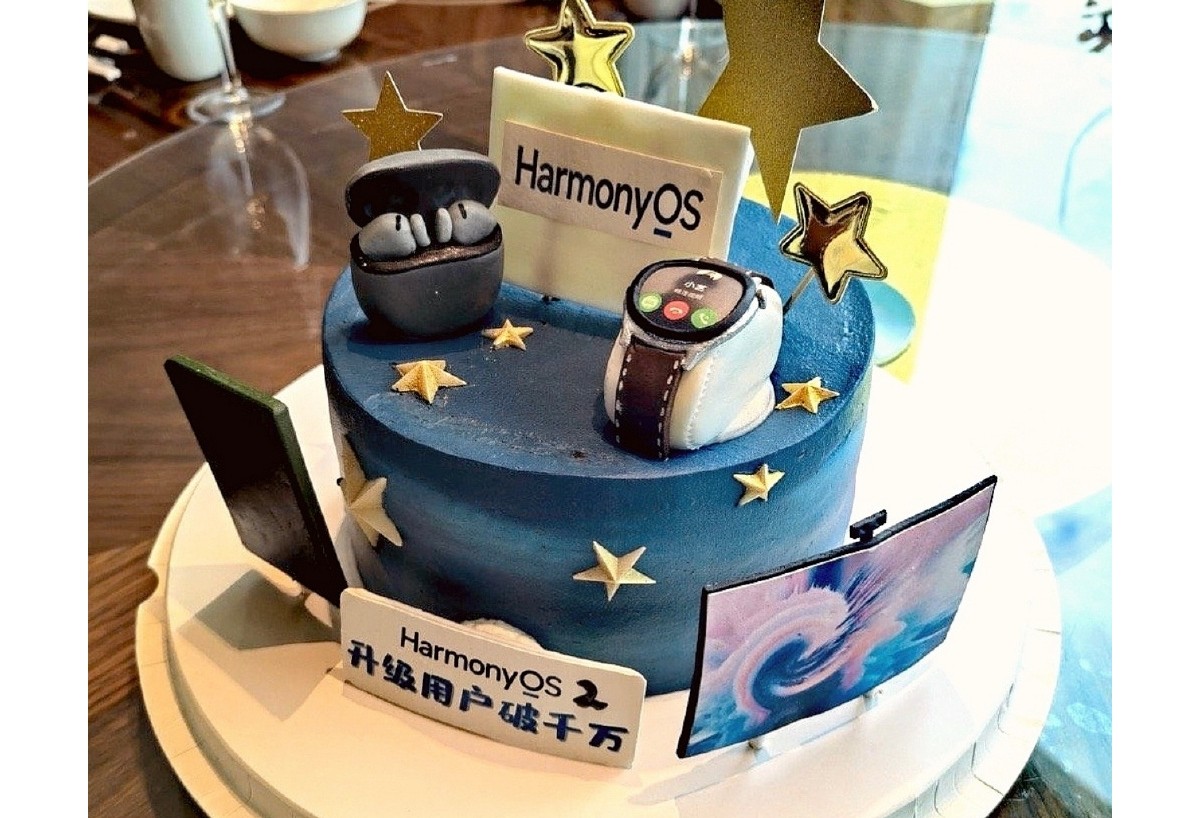
Huawei's new HarmonyOS 2 seems to be quite successful in China, as it's already passed 10 million users - aka active devices using it.

To mark the momentous occasion, the company has decided to celebrate with a rather unique-looking cake, as you can see below. The TWS headphones, watch, phone, and TV are all edible elements making up the cake, by the way.

Huawei's HarmonyOS 2 already passes 10 million users

While the uptake of the new brand is incredibly quick, it's important to note that HarmonyOS isn't one OS, in fact it seems to act more like an all-encompassing umbrella brand for all of Huawei's different operating systems as well as its Internet-of-Things stuff.

The update to HarmonyOS 2 is available right now for the Mate 40 series, P40 series, Mate 30 series, and MatePad Pro in China, while the P30 series and Honor 30 and V30 series will get closed betas this month and public betas in July.

It will be interesting to see how the company handles the transition to HarmonyOS outside of China, on international devices. Anyway, the numbers of products running a version of HarmonyOS are definitely only set to grow in the future, after this great start. Huawei in fact hopes to achieve 360 million active devices running HarmonyOS by the end of the year, as well as convincing 1.2 million developers to write apps for its platforms.

Source (in Chinese) | Via

The Link Lonk


June 10, 2021 at 08:18AM
https://ift.tt/3g64Hqn

Huawei's HarmonyOS 2 already passes 10 million users - GSMArena.com news - GSMArena.com

https://ift.tt/3eIwkCL
Huawei

Wednesday, June 9, 2021

US tech bill locks Huawei on Washington’s trade blacklist - South China Morning Post

huawei.indah.link
[unable to retrieve full-text content]US tech bill locks Huawei on Washington’s trade blacklist  South China Morning Post The Link Lonk


June 09, 2021 at 08:00PM
https://ift.tt/3pExxRD

US tech bill locks Huawei on Washington’s trade blacklist - South China Morning Post

https://ift.tt/3eIwkCL
Huawei

China's Huawei to be excluded from influential JPMorgan bond indices - Reuters

huawei.indah.link

Logo of Huawei is seen in front of the local offices of Huawei in Warsaw, Poland January 11, 2019. REUTERS/Kacper Pempel/File Photo

U.S. bank JPMorgan said it will exclude Huawei's dollar bonds from some its most influential investment indices from the end of next month, following the latest ratcheting up of U.S. sanctions on Chinese technology firms.

U.S. President Joe Biden's administration issued a new executive order last week banning U.S. entities from buying or selling the publicly-traded securities of 59 Chinese companies with alleged ties to defense or surveillance. read more

"Huawei USD-denominated bonds will be excluded from J.P. Morgan fixed income indices (including the CEMBI and JACI families) since the issuing entities for these securities (Proven Glory Capital Ltd. and Proven Honour Capital Ltd.) are explicitly named and in scope of the Amended Order," JPMorgan said in a note to index users late on Tuesday.

It added that the exclusion would happen on July 30. Huawei's bonds currently have a 9 basis points weight in the widely-tracked CEMBI Broad Diversified index of emerging market companies, 36 bps in the Asia-focused JACI index and 38bps in the environmental, social and governance (ESG) version of the JACI.

The U.S. investment bank estimates the CEMBI and JACI index groups have more than $140 billion and $80 billion in assets benchmarked to them respectively - money which relates to the global investment funds that use these kind of indices as a shopping list of what to buy.

Huawei, which is China's leading telecommunications equipment maker, was first put on a U.S. trade blacklist in May 2019 due to national security concerns. Huawei has repeatedly denied it is a risk. read more

The ban put Huawei's handset business under immense pressure. Once the world's biggest smartphone maker, Huawei is now ranked sixth, with a 4% market share in the first quarter.

JPMorgan said new and existing bonds from Huawei (HWT.UL) and Semiconductor Manufacturing International Corp (0981.HK) will remain excluded from the indices.

Those of China National Chemical (CNNCC.UL) and Sinochem (SASADA.UL) will remain in, meanwhile, after they were not included in last week's new sanctions list.

Our Standards: The Thomson Reuters Trust Principles.

The Link Lonk


June 09, 2021 at 03:44PM
https://ift.tt/3zi5dJA

China's Huawei to be excluded from influential JPMorgan bond indices - Reuters

https://ift.tt/3eIwkCL
Huawei

Huawei Opens Its Largest Global Cyber Security and Privacy Protection Transparency Center in China - Huawei

huawei.indah.link

[Dongguan, China, June 9, 2021] Huawei opened its largest Global Cyber Security and Privacy Protection Transparency Center in Dongguan, China today, with representatives from GSMA, SUSE, the British Standards Institution, and regulators from the UAE and Indonesia speaking at the opening ceremony.

Along with the opening of the new center, Huawei also released its Product Security Baseline, marking the first time the company has made its product security baseline framework and management practices available to the industry as a whole. These actions are part of the company's broader efforts to engage with customers, suppliers, standards organizations, and other stakeholders to jointly strengthen cyber security across the industry.

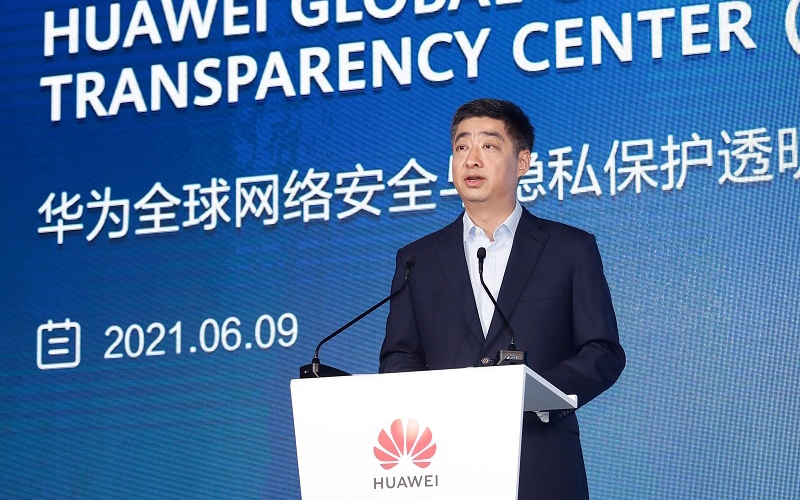
"Cyber security is more important than ever," said Ken Hu, Huawei's Rotating Chairman, at the opening of the Dongguan center. "As an industry, we need to work together, share best practices, and build our collective capabilities in governance, standards, technology, and verification. We need to give both the general public and regulators a reason to trust in the security of the products and services they use on a daily basis. Together, we can strike the right balance between security and development in an increasingly digital world."

Ken Hu

Ken Hu, Huawei's Rotating Chairman, speaks at the opening of Huawei's Global Cyber Security and Privacy Protection Transparency Center in Dongguan, China

Over the past few years, industry digitalization and new technologies like 5G and AI have made cyberspace more complex than ever, compounded by the fact that people have been spending a greater portion of their lives online throughout the COVID-19 pandemic. These trends have led to a rise in new cyber security risks.

Huawei opened the new Global Cyber Security and Privacy Protection Transparency Center in Dongguan to address these issues, providing a platform for industry stakeholders to share expertise in cyber governance and work on technical solutions together. The center is designed to demonstrate solutions and share experience, facilitate communication and joint innovation, and support security testing and verification. It will be open to regulators, independent third-party testing organizations, and standards organizations, as well as Huawei customers, partners, and suppliers.

To further a unified approach to cyber security in the telecoms industry, organizations like GSMA and 3GPP have also been working with industry stakeholders to promote NESAS Security Assurance Specifications and independent certifications. These baselines have seen wide acceptance in the industry, and will play an important role in the development and verification of secure networks.

Mats Granryd, Director General of GSMA, spoke at the opening of Huawei's new center. "The delivery of existing and new services in the 5G era will rely heavily on the connectivity provided by mobile networks and will fundamentally depend on the underlying technology being secure and trusted," he said. "Initiatives such as the GSMA 5G Cybersecurity Knowledge Base, designed to help stakeholders understand and mitigate network risks, and NESAS, an industry-wide security assurance framework, are designed to facilitate improvements in network equipment security levels across the sector."

At the event, Huawei also released its Product Security Baseline, the culmination of over a decade of experience in product security management, incorporating a broad range of external regulations, technical standards, and regulatory requirements. The Baseline, together with Huawei's other governance mechanisms, helps ensure the quality, security, and trustworthiness of the company's products. Over the years, Huawei has built over 1,500 networks that connect more than three billion people across 170 countries and regions. None of these networks have ever experienced a major security incident.

"This is the first time we've shared our security baseline framework with the entire industry, not just core suppliers," said Sean Yang, Director of Huawei's Global Cyber Security and Privacy Protection Office. "We want to invite all stakeholders, including customers, regulators, standards organizations, technology providers, and testing organizations, to join us in discussing and working on cyber security baselines. Together, we can continuously improve product security across the industry."

At present, the industry still lacks a standards-based, coordinated approach, especially when it comes to governance, technical capabilities, certification, and collaboration.

"Cybersecurity risk is a shared responsibility," concluded Ken Hu in his opening remarks. "Governments, standards organizations, and technology providers need to work closer together to develop a unified understanding of cyber security challenges. This must be an international effort. We need to set shared goals, align responsibilities, and work together to build a trustworthy digital environment that meets the challenges of today and tomorrow."

Click here to download the Huawei Product Security Baseline.

The Link Lonk


June 09, 2021 at 03:28PM
https://ift.tt/355mGXw

Huawei Opens Its Largest Global Cyber Security and Privacy Protection Transparency Center in China - Huawei

https://ift.tt/3eIwkCL
Huawei

Tuesday, June 8, 2021

Huawei Technologies USA and The Economist Assemble Technology Experts to Discuss Closing the Digital Divide - El Paso Inc.

huawei.indah.link

PLANO, Texas, June 8, 2021 /PRNewswire/ -- On Tuesday, June 15, Huawei Technologies USA, in partnership with The Economist, will bring together experts for a webinar titled: "Connecting the World: Closing the Digital Divide," to identify and debate critical issues surrounding the lack of broadband access around the world. Panelists include Joy Tan, Senior Vice President of Public Affairs at Huawei Technologies USA, Elizabeth Stuart, Executive Director of Digital Pathways at University of Oxford, Shamika Sirimanne, Technology and Logistics Director at UNCTAD and Kevin Brown, Principal at EY. The conversation will be moderated by Helen Joyce, Deputy Foreign Editor at The Economist, will begin at 12 p.m. ET on June 15, and can be registered for here.

From health care to manufacturing, and finance to fitness, digital technologies have advanced and transformed every facet of society. Yet roughly, 50% of the global population remains offline. Digital inequality reinforces existing social inequities, excluding disconnected groups and limiting opportunity. While closing this gap is an enormous challenge, both the public and private sectors must work together to accelerate widespread technological change, giving everyone access to affordable and reliable connectivity.

This webinar will discuss how software, hardware and telecommunications companies must collaborate to promote broadband access across the globe. What can stakeholders do to support and develop infrastructure, digital skills training and accelerate innovation? How should global and national level policies and regulations evolve? Which industries stand to benefit, and what must they do now to enable better connectivity? Tune in hear experts answer these questions while exploring how closing the digital divide will boost economic growth and social mobility.

For more information and to register for "Connecting the World: Closing the Digital Divide" visit: https://bit.ly/3c2Occ7

About Huawei

Huawei is a leading global provider of information and communications technology (ICT) infrastructure and smart devices. With integrated solutions across four key domains – telecom networks, IT, smart devices, and cloud services – we are committed to bringing digital to every person, home and organization for a fully connected, intelligent world.

Huawei's end-to-end portfolio of products, solutions and services are both competitive and secure. Through open collaboration with ecosystem partners, we create lasting value for our customers, working to empower people, enrich home life, and inspire innovation in organizations of all shapes and sizes.

At Huawei, innovation focuses on customer needs. We invest heavily in basic research, concentrating on technological breakthroughs that drive the world forward. We have more than 188,000 employees, and we operate in more than 170 countries and regions. Founded in 1987, Huawei is a private company fully owned by its employees.

For more information, please visit Huawei online at www.huawei.com or follow us on:

http://www.linkedin.com/company/Huawei

http://www.twitter.com/Huawei 

http://www.facebook.com/Huawei 

http://www.youtube.com/Huawei

Contact: Kimberlee Bradshaw Archibaldkbradsha@huawei.us

Cision View original content to download multimedia:http://www.prnewswire.com/news-releases/huawei-technologies-usa-and-the-economist-assemble-technology-experts-to-discuss-closing-the-digital-divide-301306701.html

SOURCE Huawei Technologies USA

The Link Lonk


June 08, 2021 at 08:00PM
https://ift.tt/3w5UIXN

Huawei Technologies USA and The Economist Assemble Technology Experts to Discuss Closing the Digital Divide - El Paso Inc.

https://ift.tt/3eIwkCL
Huawei

Featured Post

Huawei lawyers claim emails prove US has no grounds to extradite CFO from Canada - The Guardian

huawei.indah.link US justice department’s battle to extradite Meng Wanzhou from Canada has taken a fresh turn as lawyers for Huawei’s chie...

Popular Posts