Rechercher dans ce blog

Tuesday, March 30, 2021

China's Huawei Is Winning the 5G Race. Here's What the United States Should Do To Respond - Council on Foreign Relations

huawei.indah.link

In 2015, China added the Digital Silk Road (DSR) to its massive Belt and Road Initiative (BRI). While Beijing uses DSR to offer a suite of technologies to BRI countries, Huawei’s effort to provide next-generation communication networks to countries has drawn the most scrutiny in the United States.

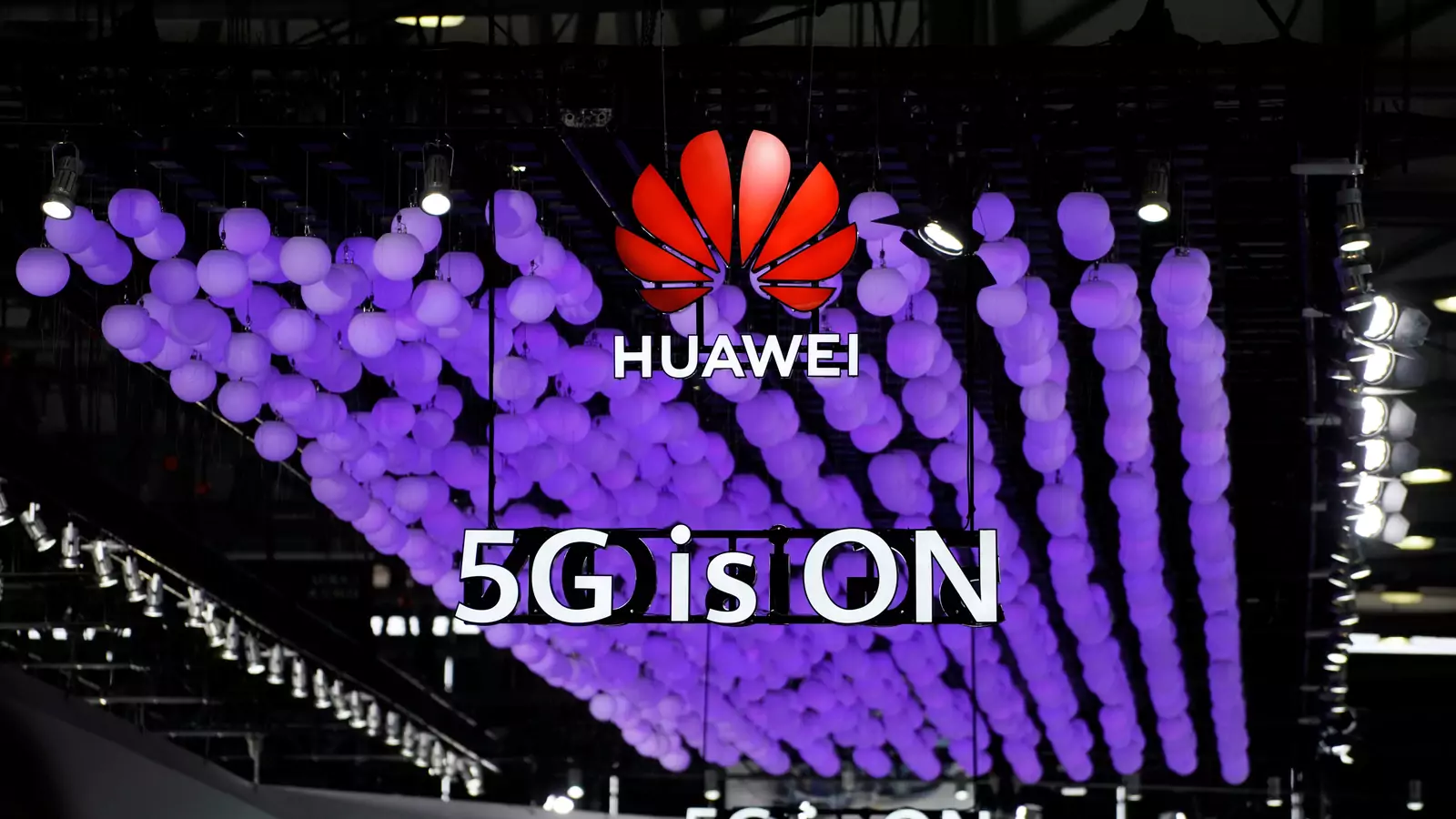
U.S. officials have frequently claimed that Huawei is effectively an extension of the Chinese Communist Party. Under China’s 2017 National Intelligence Law, Huawei, like all Chinese companies and entities, appears legally required to conduct intelligence work on behalf of the Chinese government. According to this analysis, the Chinese government has the ability to use Huawei-built fifth-generation (5G) networks to collect intelligence, monitor critics, and steal intellectual property. There are also worries that the company might bow to government demands and disable networks to exert coercive pressure on a country.

The United States also has commercial concerns. Once Huawei builds a country’s 5G network, that country is likely to choose Huawei to upgrade those systems when newer technologies become available, thus excluding U.S. companies for potentially decades. Huawei has already finalized more 5G contracts than any other telecom company, half of which are for 5G networks in Europe.

More on:

China

Belt and Road Initiative

Huawei

5G

In Africa, Huawei has built 70 percent of the continent’s 4G networks and has signed the only formal agreement on 5G, with South African wireless carrier Rain. The export of Huawei telecom equipment along the DSR has enabled the company’s share of global telecom equipment to increase by 40 percent in the years since BRI was rolled out.

In response to growing concerns about Huawei’s reach, the Trump administration leveraged U.S. dominance in advanced semiconductors to bar sales of essential computer chips to the company without a specific license. Access to U.S. chips, particularly 5G-related semiconductors that enable wireless communications, network management, and data storage, is crucial to Huawei, which is reported to be running out of supply. The Trump administration also pressured countries not to use Chinese components in their 5G infrastructure.

As part of a CFR Independent Task Force on BRI, we analyzed every country’s official policy toward Huawei 5G and the extent to which this pressure campaign has succeeded. We found that in addition to the United States, eight countries have issued outright bans of the company. Almost all of these are close U.S. allies such as Australia, Japan, and the United Kingdom.

More countries have taken a quieter approach, attempting to simultaneously allay U.S. concerns and not provoke a Chinese response. Some have taken measures that amount to a de facto ban without actually barring Huawei. For example:

  • India has not formally banned the company but has begun to phase out the use of Huawei equipment in future projects, and is reportedly weighing a formal ban.
  • France announced telecommunications operators would not be able to renew licenses for Huawei equipment when they expired, effectively phasing out the company’s presence in the country.
  • Vietnam has not barred Huawei, but its service providers have avoided using its equipment in both their 4G and 5G networks.
  • Italy’s government vetoed a deal between Huawei and telecommunications provider Fastweb that would have used Huawei as the sole supplier of its 5G network.
  • Canada has put off a decision on Huawei for so long that its companies have chosen to exclude Huawei from their 5G networks due to the risk that they will be forced to replace the equipment in the future.

More on:

China

Belt and Road Initiative

Huawei

5G

Still, others have chosen to use Huawei’s competitors without taking a public stance against the company. The largest telecommunications firms in Belgium, Croatia, Finland, Greece, Norway, Portugal, Singapore, and Spain have all contracted with Ericsson or Nokia to build their 5G networks.

While the U.S. pressure campaign has had some success, it is likely meeting its limits. The threat of the loss of intelligence sharing and security partnerships is unlikely to persuade countries that are not formal allies or close security partners with Washington.

Moreover, the United States has been unable to persuade all of its allies to avoid Huawei. The company is involved in 5G networks in NATO members Hungary, Iceland, the Netherlands, and Turkey. Some of the United States’ closest partners in the Middle East, including Saudi Arabia and the United Arab Emirates, are also using Huawei.

A principal reason that the United States has not had more success in persuading countries not to use Huawei equipment is that it cannot offer an alternative. The United States does not and will not have a company that is competitive in the full stack of 5G equipment.

To make it easier for countries to avoid Huawei, our Task Force recommends that the U.S. Development Finance Corporation partner with its counterparts in Finland, South Korea, and Sweden to co-finance Nokia, Samsung, and Ericsson 5G projects.

The United States should also work with its partners to develop the nascent open radio access network, or Open RAN, architecture. While Huawei offers a full 5G stack, Open RAN allows multiple companies to supply different parts of a modular 5G network. The hope is that 5G networks built on an Open RAN architecture can better compete with Huawei on price. In addition, while no U.S. company offers an end-to-end 5G solution, they can better compete by specializing in individual components of a modular network, like end-user devices.

In the longer term, the United States must be better prepared for the arrival of 6G, which is likely to replace 5G within 15 years. U.S. policy-makers should fund R&D centers at universities that focus on 6G technologies, and consider tax breaks and other incentives to support private sector investment in 6G, so that there is at least one competitive U.S. company in this space.

Finally, recognizing that some U.S. allies and partners will adopt Huawei 5G despite U.S. pressure, the United States will need to develop mitigation plans for possible Chinese disruption of telecommunications infrastructure in those countries. In the words of one Pentagon-advisory group study, the U.S. military will need to “assume that all network infrastructure will ultimately become vulnerable to cyber-attack” and adopt a “zero-trust” network model.

Washington cannot expect countries to sit on the sidelines and forego upgrades to their networks while the United States gets its act together. Instead, the United States should work with allies and partners to offer a viable alternative and prepare for a future in which China controls a large part of the 5G infrastructure.

The Link Lonk


March 25, 2021 at 08:00PM
https://ift.tt/3djAFN4

China's Huawei Is Winning the 5G Race. Here's What the United States Should Do To Respond - Council on Foreign Relations

https://ift.tt/3eIwkCL
Huawei

Xiaomi looks to overtake Huawei - Financial Times

huawei.indah.link

The electric car could become the new smartphone — it’s a bunch of chips wrapped inside a sleek body, just on a much larger scale.

Perhaps that’s Xiaomi’s thinking in announcing today it would put $10bn into building a smart car over the next decade. Or maybe the strategy is on the lines of Xiaomi could become the new Huawei.

The Chinese company overtook its smartphone rival in the fourth quarter of 2020, with sales increasing by a third to 43.4m, making it the Number Three maker globally behind Apple and Samsung, according to Gartner. Huawei, crippled by sanctions that have denied it access to Google services on Android, saw sales fall 41 per cent.

Xiaomi has been hammering home its advantage with a series of phone launches this year, including three new models on Monday and a foldable phone today.

“The avalanche of new products from Xiaomi underlines its global ambitions,” said Ben Wood, chief analyst at CCS Insight. “Xiaomi is vying to take over the mantle that Huawei has been forced to relinquish,” said Richard Windsor of Radio Free Mobile.

The car idea challenges Huawei’s plans for one as well. Phonemaker ZTE and search engine Baidu are also pushing into electric vehicles and autonomous driving. Like Baidu, and supposedly Apple, Xiaomi may partner with a carmaker, with Great Wall Motors being a reported candidate.

So tech companies could become the new car companies, aided by contract manufacturers like Foxconn, best known for assembling the iPhone. Lex says the Taiwanese company already has useful experience in auto electronics and its goal of taking a tenth of the global electric car market as early as 2025 is not far-fetched.

However, like carmakers, it is currently being hit by the global shortage of electronics components. Young Liu, Foxconn chair, told investors on an earnings call on Tuesday that the shortage would persist until 2022.

Japan’s Renesas Electronics, one of the world’s largest makers of chips for the automotive industry, has the added problem of a fire this month at one of its factories that it said would have a massive impact on global chip supplies. Japan’s national champion for semiconductors is one company actually trying to diversify itself away from cars, with deals such as its €4.9bn acquisition of Apple supplier Dialog. 

The Internet of (Five) Things

1. Keep on electric truckin’
From cars to trucks, Patrick McGee in San Francisco reports self-driving start-up Aurora has signed a multiyear partnership with Volvo Trucks — as heavy-duty lorries emerge as a main battleground for autonomous technology as the mass rollout of robotaxis falters. Leo Lewis in Tokyo has been looking at Japan’s quest to re-establish its dominance in batteries.

2. Deliveroo sets basement price
Deliveroo has set the final price for its initial public offering at £3.90 a share, the bottom of its initial range and valuing the food delivery company at £1.3bn less than the top end of its original expectations. The final price per share will leave its market capitalisation at £7.6bn when trading begins on Wednesday morning.

Daily newsletter

#techFT brings you news, comment and analysis on the big companies, technologies and issues shaping this fastest moving of sectors from specialists based around the world. Click here to get #techFT in your inbox.

3. Oxford Nanopore picks London for IPO
DNA sequencing technology start-up Oxford Nanopore has chosen to list in the UK for its initial public offering later this year. The Oxford-based company is likely to be one of the largest floats this year in London, with analysts valuing it at £4bn to £7bn. 

4. Netflix to clean up its carbon act
Netflix, the maker of the Attenborough climate documentary, plans to banish dirty diesel generators from film sets and use more virtual production techniques, after a review found that more than half of the company’s carbon emissions came from film production rather than from streaming video from data centres.

5. Improbable dreams fade
Nostos is the latest in a string of scrapped games built with Improbable World’s SpatialOS software, raising questions about a technology that won a $500m investment from SoftBank in 2017, then the biggest ever investment in a UK start-up. Kadhim Shubber has been looking at how the company has fallen far short of its lofty ambition to build “something like The Matrix”.

Tech tools — Google’s AI Maps

The search giant announced today it is on track to bring over 100 AI-powered improvements to Google Maps this year. They include helping you find your way better indoors using Live View’s visual aids and new weather and air quality layers so you can quickly see current and forecasted conditions in the area. A new routing model works out lower fuel consumption options, based on factors like road incline and traffic congestion.

There is also a pilot this summer with the US supermarket chain Fred Meyer for kerbside pick-ups — “After you place an order for pick-up on the store’s app, you can add it to Maps. We’ll send you a notification when it’s time to leave, and let you share your arrival time with the store. Your ETA is continuously updated, based on location and traffic. This helps the store prioritise your order so it’s ready as soon as you get there. Check in on the Google Maps app, and they’ll bring your order right out for a seamless, fast, no-contact pick-up.”

Sounds perfect pandemic shopping!

The Link Lonk


March 31, 2021 at 12:48AM
https://ift.tt/39t2vFE

Xiaomi looks to overtake Huawei - Financial Times

https://ift.tt/3eIwkCL
Huawei

Huawei P50 possibly delayed again, MatePad Pro2 now the likely HarmonyOS pioneer - GSMArena.com news - GSMArena.com

huawei.indah.link

The Huawei P50 series may have been delayed yet again. It is believed that Huawei originally had an end of March event planned at which it would have announced the release of HarmonyOS 2.0 and the first phones to run it out of the box – the P50 models.

However, the phone launch was pushed back – to June, according to unconfirmed info – and the company didn’t want to hold back the release of its Android replacement OS. So, Huawei officially confirmed that HarmonyOS is coming in April.

As for the P50 series, Weibo users are claiming that the new launch date has been tentatively set for May. Of course, this is far from a solid commitment and can change again as the company tries to sort out its supply chain.

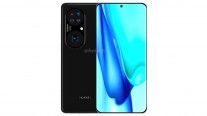
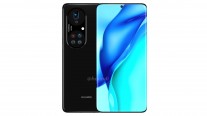
Renders by HoilNDI: Huawei P50 Renders by HoilNDI: Huawei P50 Pro Renders by HoilNDI: Huawei P50 Pro+
Huawei P50 • Huawei P50 Pro • Huawei P50 Pro+, Renders by HoilNDI

The Weibo users are also preparing their smartphone fantasy football game, noting the Xiaomi Mi 11 Ultra from yesterday and its 1/1.12” sensor, which is supposed to be surpassed only by P50’s 1” IMX800 sensor. That is if and when the P50 actually launches (the stats on the IMX800 are based purely on rumors too).

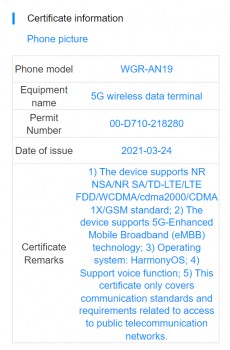
What of HarmonyOS then? We already know that Huawei Mate X2 will be the first device to be updated to the stable release (the foldable currently runs Android 10). With the P50 out of the running, a tablet may become the first mobile device to run Harmony out of the box – the Huawei MatePad Pro2 is listed at MIIT with HarmonyOS.

Huawei MatePad Pro2 (WGR-AN19) details by MIIT reveal HarmonyOS software

The tablet, WGR-AN19 (“Wagner”), has popped up in a few other places. From what we can gather so far, it will be powered by the scarce Kirin 9000 chipset. It will have two versions, one with a 12.2” display from BOE and one with a 12.6” display from Samsung (presumably an AMOLED). Additionally, it will support 40W fast charging, as per 3C data.

Source 1 | Via 1 | Source 2 | Via 2

The Link Lonk


March 30, 2021 at 06:59PM
https://ift.tt/2Phhhs4

Huawei P50 possibly delayed again, MatePad Pro2 now the likely HarmonyOS pioneer - GSMArena.com news - GSMArena.com

https://ift.tt/3eIwkCL
Huawei

Monday, March 29, 2021

China's Xiaomi launches premium phone to challenge Apple and Samsung and fill void left by Huawei - CNBC

huawei.indah.link

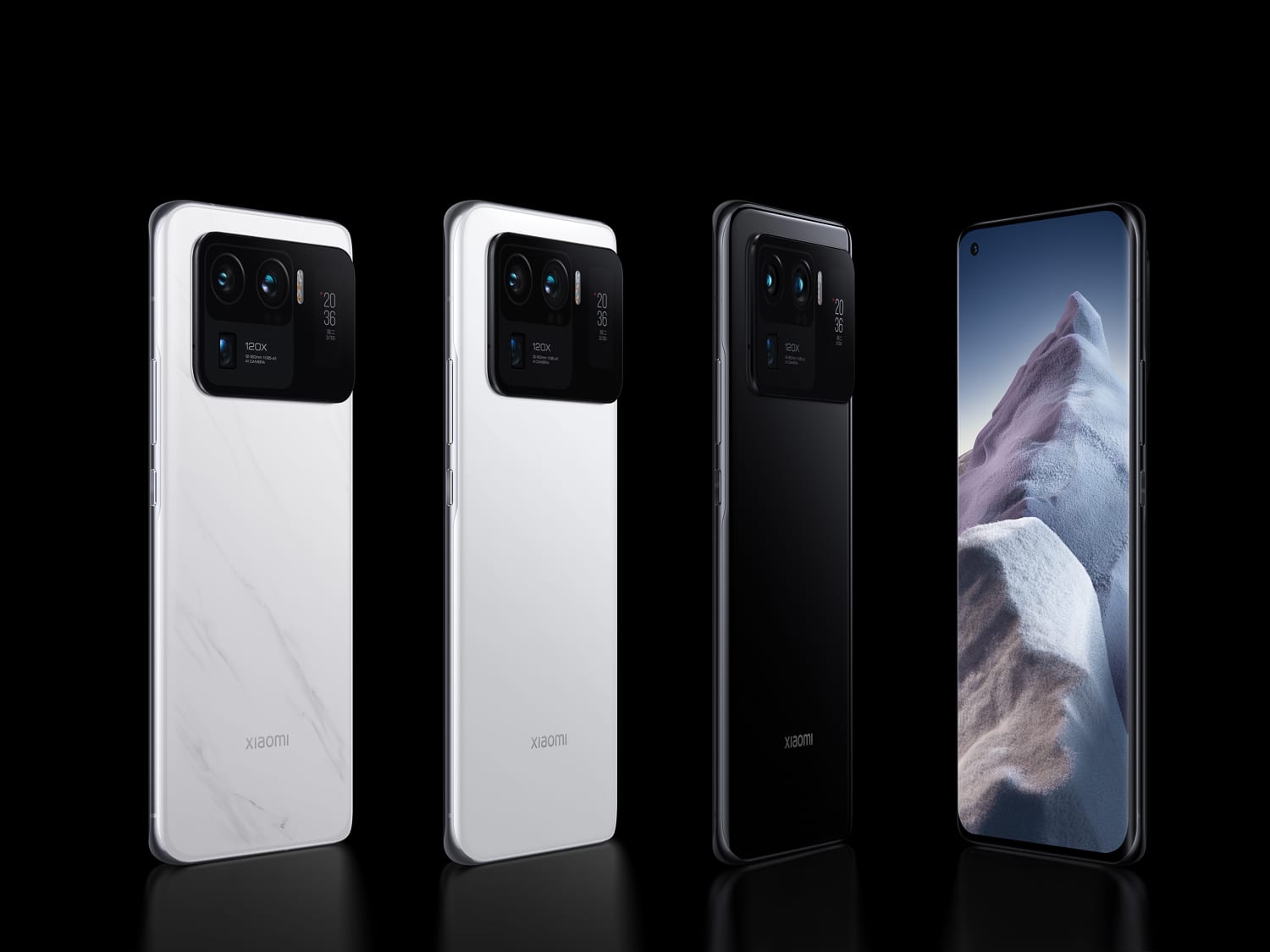
Xiaomi Launched the Mi 11 Ultra smartphone at an event on Monday, March 29. The Chinese smartphone giant is hoping the Mi 11 Ultra will help it push into the premium segment of the market.

Xiaomi

GUANGZHOU, China — Xiaomi launched a slew of new smartphones on Monday, with one high-end device aimed at international markets as it looks to push into the premium segment and fill the void left by rival Huawei's troubles.

The devices are:

  • Mi 11 Lite and Mi 11 Lite 5G
  • Mi 11 Pro
  • Mi 11 Ultra

The Mi 11 Ultra is the smartphone aimed at international markets in the premium segment. It will start at 5,999 yuan ($914) and go up to 6,999 yuan ($1,066) for a higher spec version. Xiaomi has not yet said what markets it will be available in outside of China.

With the Mi 11 Ultra, Xiaomi is entering into stiff competition with leaders Samsung and Apple, but also Chinese rivals including Oppo and Vivo, which have looked to boost their high-end credentials and expand into more mature markets such as Europe in the last few years.

"Early last year, we started to move into the high range market," Xiaomi CEO Lei Jun said at a launch event on Monday. "I think we have found a foothold in the high-range market." 

The CEO spent a lot of time talking about the camera on the Mi 11 Ultra which boasts three sensors. The camera takes up a large amount of real estate on the back of the phone. Lei talked up the low-light photography and zoom as well as the algorithm behind the camera.

Other features include:

  • A 6.81-inch display
  • 5G connectivity
  • Qualcomm Snapdragon 888 chipset inside

"These days, the camera makes the phone. Xiaomi knows it and went all-out with the Ultra," Bryan Ma, vice president of client devices research at IDC, told CNBC.

"Xiaomi may be thumping its chest after tonight's launch, but the competition from rivals is so intense that it can't sit comfortably for long."

Huawei void

Xiaomi will likely be hoping to take advantage of some of Huawei's issues in the smartphone market that have come as a result of U.S. sanctions on the telecommunications equipment giant.

In 2019, Huawei was put on a U.S. blacklist known as the Entity List which restricted American firms from exporting technology to the Chinese company. Google had to cut ties with Huawei meaning the Chinese firm could not use the Android operating system on its devices. That's not a big deal in China where Google services such as Gmail and search are blocked. But overseas, consumers are used to using such apps.

And Washington also moved to cut Huawei off from the chips it needed for its smartphones.

The U.S. maintains Huawei is a national security threat, a claim the Chinese company has repeatedly denied.

Xiaomi has also faced scrutiny from the U.S. The administration of former President Donald Trump designated Xiaomi a "Communist Chinese military companies" or CCMC. That restricted American investors from buying shares or related securities of Xiaomi. But a judge temporarily blocked that move after Xiaomi brought a lawsuit against the U.S. Xiaomi said at the time that it was "not owned, controlled or affiliated with the Chinese military."

Huawei saw its global shipments fall 41% year-on-year in the fourth quarter, according to Counterpoint Research. In Europe alone, shipments plunged 62%.

Xiaomi, Oppo and Vivo all saw double-digit smartphone shipment growth in the fourth quarter of 2020, according to Canalys. Xiaomi was the third-biggest smartphone maker by market share during the same period.

But Xiaomi may not be the best positioned in the premium segment versus some of its rivals, Neil Shah, research director at Counterpoint Research, said.

"Xiaomi is doing well to fill to the void left by Huawei in low-to-mid segments especially in Europe, Latin America." Shah said. "The premium segment is still up for grabs. While Samsung and Apple are very well positioned to capture these volumes, among Chinese brands OnePlus & Oppo should be better beneficiaries."

Shah said that Xiaomi's Chinese rivals have ramped up marketing and distribution investments overseas.

The Link Lonk


March 29, 2021 at 08:45PM
https://ift.tt/3m8RjTJ

China's Xiaomi launches premium phone to challenge Apple and Samsung and fill void left by Huawei - CNBC

https://ift.tt/3eIwkCL
Huawei

Huawei Launches the Latest CloudFabric 3.0 Hyper-Converged Data Center Network Solution, Unleashing Computing Power with New Ethernet - PRNewswire

huawei.indah.link

SHENZHEN, China, March 29, 2021 /PRNewswire/ -- At the Huawei Industrial Digital Transformation Conference 2021, Huawei unveiled its latest CloudFabric 3.0 Hyper-Converged Data Center Network Solution. This future-proof solution is ideal for building lossless computing and storage networks based on an all-Ethernet architecture, and has been designed to unleash 100% of computing power. In addition, as an L3 autonomous driving network trendsetter, this solution also stands out by offering full-lifecycle network automation and network-wide intelligent O&M, reducing OPEX by up to 30% and empowering enterprises' intelligent upgrades.

Kevin Hu, President of Huawei's Data Communication Product Line, said, "Data center stores large amounts of valuable data. Data is the main production factor of the intelligent world. During digitalization of enterprises, we need to use data every moment, so data needs to be efficiently stored and transmitted. To this end, storage and network must highly collaborate in data centers."

He continued: "most of the storage devices are all-flash, and more services are moving to the cloud. With these changes, data center networks are transforming towards all Ethernet. However, traditional Ethernet is now faced with multiple challenges, such as how to eliminate network problems caused by packet loss. These include losses of computing power and data as well as complex service deployment and network O&M."

To overcome these challenges, Huawei has launched the latest CloudFabric 3.0 Hyper-Converged Data Center Network Solution. The following are just some of the innovations that separate this solution from the competition:

  • Ethernet for High-Performance Computing: Eliminates Ethernet Packet Loss and Unleashes 100% of Computing Power

Huawei has introduced an intelligent lossless (iLossless) algorithm to network connectivity, which dynamically adjusts parameter settings based on the real-time network traffic status to enable zero packet loss on data center networks and maximize computing power.

  • Active-Active All-Ethernet Storage Network: Enables Long-Distance Lossless Transmission on the Ethernet and Boosts Active-Active Storage Performance

Huawei has made a significant step forward in long-distance data transmission by unveiling the iLossless-DCI algorithm, which extends lossless transmission distances on Ethernet to a maximum of 70 km. Compared with conventional storage networks, this feature-rich active-active all-Ethernet storage network improves IOPS by more than 80%.

  • Full-Lifecycle Network Automation: Implements NaaS and Service Provisioning in Seconds

Huawei's CloudFabric 3.0 also innovates with 3D modeling, which enables automated design and optimal recommendation of network solutions via multi-dimensional, comprehensive optimal solving. The resulting benefits include NaaS, service provisioning in seconds, and full-lifecycle network intelligence encompassing network planning, construction, maintenance, and optimization.

  • Network-Wide Intelligent O&M: Achieves Fault Self-healing and Ensures 24/7 Always-on Services

Huawei also ushered in a new wave of network-wide intelligent O&M by introducing knowledge graphs to data center networks, implementing rapid fault locating in minutes, and proactive prediction of up to 97% of network risks. Thanks to network-wide intelligent O&M capabilities, Huawei's CloudFabric 3.0 enables a beneficial transformation from passive to proactive O&M, ensuring 24/7 always-on services.

This latest data center network solution is built on joint innovation between Huawei and global leading industry customers. Looking ahead, the trend towards energetic digitalization is truly revolutionizing networks. To keep pace, Huawei will continue enhancing network capabilities to maximize computing power and enable intelligent upgrades for enterprises of all sizes. To date, Huawei's data center network solutions have been deployed in more than 12,000 data centers around the world, delivering optimal services to a wide range of industries, including finance, government, ISP, manufacturing, and energy.

To learn more about The Huawei Industrial Digital Transformation Conference 2021, click https://e.huawei.com/en/events/industry-digital-transformation/2021

Related Links

www.huawei.com/cn

SOURCE Huawei

The Link Lonk


March 29, 2021 at 03:44PM
https://ift.tt/3tWwhKO

Huawei Launches the Latest CloudFabric 3.0 Hyper-Converged Data Center Network Solution, Unleashing Computing Power with New Ethernet - PRNewswire

https://ift.tt/3eIwkCL
Huawei

Chinese Conglomerate Huawei Gains Mobile Payments License By Buying Xunlian - pymnts.com

huawei.indah.link

Chinese behemoth Huawei Technologies has reportedly landed a mobile payments license in China after buying Xunlian Zhifu Network. Huawei has previously used UnionPay’s mobile payment service.

The Huawei Pay app, launched in 2016, has allowed Huawei phone owners to pay for goods online and in brick-and-mortar stores.

That app, however, is based on near-field communication, a technology that is not widely used in China, KrAsia reported. Zhang Yu, an analyst with iResearch, said, “It is necessary for Huawei to hold a payment license since the company wants to provide more payment and other financial services.”

In theory, that brings Huawei into competition with  Ant Group’s Alipay and Tencent Holdings’ WeChat Pay. Taken together, the two account for about 98 percent of the country’s mobile payments market.

With a payments license, Zhang said, Huawei won’t challenge those powerhouse apps. That’s because Huawei will still promote its mobile payment services primarily within its own ecosystem, he said.

“Huawei made this acquisition with the goal of offering a wider range of secure, easy-to-use smart services,” a company spokesperson told KrASIA.

The company bought Xunlian from Shanghai’s Wo Rui Ou Information Technology Co., China Securities Journal reported on Sunday (March28).

Shenzhen-based Huawei has come under suspicion due to security concerns. The U.S. has pressured the European Union to be cautious of Huawei, due to fears that the company could use its equipment to spy on other nations. Huawei, a competitor of Nokia and Ericsson, has repeatedly denied that it performs any clandestine operations.

Guidelines from the EU, issued in 2020, allow for countries to restrict or exclude “high-risk” 5G providers from important parts of their telecom networks. This meant that 5G provider Huawei could be affected.

These guidelines warn about security interference from a third country as well as the dangers of relying on only one vendor.

——————————

PYMNTS STUDY: A NEW APPROACH FOR MODERNIZING PAYMENTS IN BANKING – 2021

About The Study: A New Approach For Modernizing Payments In Banking, a PYMNTS collaboration with Red Hat and Temenos, is a research-based report examining the trends transforming retail commerce and how these shifts are creating new challenges and opportunities for banks. The report aims to offer banks a roadmap to help them gain the technical capacity to support digital payments in all their forms.

The Link Lonk


March 30, 2021 at 12:40AM
https://ift.tt/3m3p1Kv

Chinese Conglomerate Huawei Gains Mobile Payments License By Buying Xunlian - pymnts.com

https://ift.tt/3eIwkCL
Huawei

Huawei Launches Latest CloudFabric 3.0 Hyper-converged Data Center Network Solution - HPCwire

huawei.indah.link

SHENZHEN, China, March 29, 2021 — At the Huawei Industrial Digital Transformation Conference 2021, Huawei unveiled its latest CloudFabric 3.0 Hyper-Converged Data Center Network Solution. This future-proof solution is ideal for building lossless computing and storage networks based on an all-Ethernet architecture, and has been designed to unleash 100% of computing power. In addition, as an L3 autonomous driving network trendsetter, this solution also stands out by offering full-lifecycle network automation and network-wide intelligent O&M, reducing OPEX by up to 30% and empowering enterprises’ intelligent upgrades.

Kevin Hu, President of Huawei’s Data Communication Product Line, said, “Data center stores large amounts of valuable data. Data is the main production factor of the intelligent world. During digitalization of enterprises, we need to use data every moment, so data needs to be efficiently stored and transmitted. To this end, storage and network must highly collaborate in data centers.”

He continued: “most of the storage devices are all-flash, and more services are moving to the cloud. With these changes, data center networks are transforming towards all Ethernet. However, traditional Ethernet is now faced with multiple challenges, such as how to eliminate network problems caused by packet loss. These include losses of computing power and data as well as complex service deployment and network O&M.”

To overcome these challenges, Huawei has launched the latest CloudFabric 3.0 Hyper-Converged Data Center Network Solution. The following are just some of the innovations that separate this solution from the competition:

  • Ethernet for High-Performance Computing: Eliminates Ethernet Packet Loss and Unleashes 100% of Computing Power. Huawei has introduced an intelligent lossless (iLossless) algorithm to network connectivity, which dynamically adjusts parameter settings based on the real-time network traffic status to enable zero packet loss on data center networks and maximize computing power.
  • Active-Active All-Ethernet Storage Network: Enables Long-Distance Lossless Transmission on the Ethernet and Boosts Active-Active Storage Performance. Huawei has made a significant step forward in long-distance data transmission by unveiling the iLossless-DCI algorithm, which extends lossless transmission distances on Ethernet to a maximum of 70 km. Compared with conventional storage networks, this feature-rich active-active all-Ethernet storage network improves IOPS by more than 80%.
  • Full-Lifecycle Network Automation: Implements NaaS and Service Provisioning in Seconds. Huawei’s CloudFabric 3.0 also innovates with 3D modeling, which enables automated design and optimal recommendation of network solutions via multi-dimensional, comprehensive optimal solving. The resulting benefits include NaaS, service provisioning in seconds, and full-lifecycle network intelligence encompassing network planning, construction, maintenance, and optimization.
  • Network-Wide Intelligent O&M: Achieves Fault Self-healing and Ensures 24/7 Always-on Services. Huawei also ushered in a new wave of network-wide intelligent O&M by introducing knowledge graphs to data center networks, implementing rapid fault locating in minutes, and proactive prediction of up to 97% of network risks. Thanks to network-wide intelligent O&M capabilities, Huawei’s CloudFabric 3.0 enables a beneficial transformation from passive to proactive O&M, ensuring 24/7 always-on services.

This latest data center network solution is built on joint innovation between Huawei and global leading industry customers. Looking ahead, the trend towards energetic digitalization is truly revolutionizing networks. To keep pace, Huawei will continue enhancing network capabilities to maximize computing power and enable intelligent upgrades for enterprises of all sizes. To date, Huawei’s data center network solutions have been deployed in more than 12,000 data centers around the world, delivering optimal services to a wide range of industries, including finance, government, ISP, manufacturing, and energy.


Source: Huawei

The Link Lonk


March 29, 2021 at 11:19PM
https://ift.tt/3w3V3dT

Huawei Launches Latest CloudFabric 3.0 Hyper-converged Data Center Network Solution - HPCwire

https://ift.tt/3eIwkCL
Huawei

Featured Post

Huawei lawyers claim emails prove US has no grounds to extradite CFO from Canada - The Guardian

huawei.indah.link US justice department’s battle to extradite Meng Wanzhou from Canada has taken a fresh turn as lawyers for Huawei’s chie...

Popular Posts