Rechercher dans ce blog

Saturday, September 5, 2020

Huawei Finally Launches Brilliant Google Alternative - Forbes

huawei.indah.link

September 5 update below. This post was first published on September 3 2020.

Huawei’s latest devices have no access to Google’s Play Store, instead relying on its own store, called Huawei AppGallery. This means many crucial apps aren’t available. Now, an important arrival means one area with a big gap – navigation – suddenly has enough apps to make AppGallery a potent alternative.

MORE FROM FORBESApple Releases iOS 13.7: Surprise Update With Indispensable Covid-19 Upgrade

This week, TomTom Go Navigation launched on AppGallery. This means it’s now available on Apple’s App Store and Google’s Play Store as well as on Huawei phones.

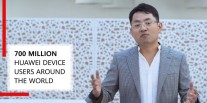
September 5 update. This week saw the opening of the IFA electronics show which takes place in Berlin but is mostly online this year, At the opening day, Walter Ji, who is President of Huawei’s Consumer Business Group, Europe, delivered a (virtual) keynote speech – you can see it here, it lasts 26 minutes.

Recommended For You

The content of the speech chimed with Huawei’s commitment to make the AppGallery a credible alternative to iOS and Android. It was primarily designed to reassure what the company described as “the millions of European customers who voluntarily choose and trust Huawei’s technology”. Why is this important? Well, if that commitment is there for Europe, then customers outside China are being strongly supported, Huawei is saying.

The AppGallery, the keynote mentioned, is now the third largest app marketplace – well, that’s hardly a surprise and there’s a pretty big gap between numbers two and three. All it really means is it’s overtaken Amazon’s app store. Peter Gauden, Head of WEU EcoSystem Marketing, contributed to the keynote and explained that more than 5,000 new apps were being added each month. Which is more than might have been expected. Globally, there were 184 billion downloads of AppGallery apps in the first half of the year, though that’s not broken down by nation. Gauden also shared the detail that there are 33 million monthly active users of AppGallery in Europe out of 460 million worldwide.

Globally registered developers now total 1.6 million, Gauden said, which is a 76% increase over the first half of 2019.

He also said that Petal Search has proved very popular, with more than 1 million European users. Set against the number of European iPhone users, say, that’s not huge but here’s the thing: Petal Search, realistically, is only used by users of Huawei phones which don’t have full-fat Android on board, that is, phones from the Huawei Mate 30 onwards.

There was a strong commitment by Ji to research and development, including the claim (which is pretty powerful, assuming it’s true), that Huawei is the fifth biggest investor in R&D worldwide. It’s also the fifth on the 2019 EU Industrial R&D Investment Scoreboard. No, I’ve never heard of that scoreboard either, so I can’t judge what it means. But Huawei committed to invest an extra $100 billion in R&D over five years, back in 2018 and there was a confirmation that this was on track.

All of which seems to indicate one thing: if any company in the world could create a viable third app system, it would be Huawei – something that neither Microsoft nor Nokia were successful in doing. Nor BlackBerry, for that matter.

Huawei Mobile Services Core has 81,000 apps globally integrated with it, the keynote explained, which is important as that’s what’s on offer as an alternative to Google Mobile Services which underpins many apps such as Google Maps, for instance. And one of those 81,000 is TomTom Go Navigation…

As reported by fellow Forbes contributor Zak Doffman earlier in the year, AppGallery previously took a big step forward in mapping terms when the excellent Here WeGo Maps debuted on Huawei’s store.

Here WeGo offers special benefits such as offline use thanks to free downloads of country maps in advance. But using it offline means no traffic information, for instance.

MORE FROM FORBESApple Watch And iPhone Make You 76% More Attractive On Dating Apps - Is That All?

And though Here WeGo has an impeccable pedigree – it began as Nokia Maps when the Finnish company bought NavTel – it has never reached critical mass.

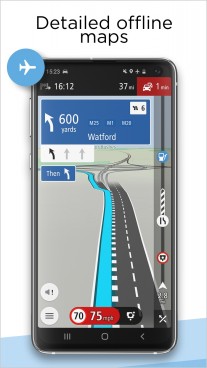
TomTom, however, is an unquestionable big beast in the world of mapping with huge name recognition. It also has an offline setting, something that’s strikingly important for navigation apps, since you may well be using it abroad where roaming costs can be high. With TomTom Go Navigation, detailed 3D maps are stored on the phone.

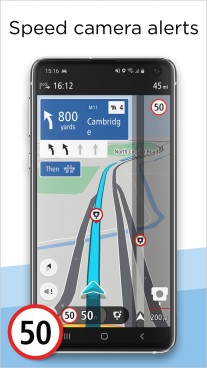
Go online and traffic information and speed camera warnings are available.
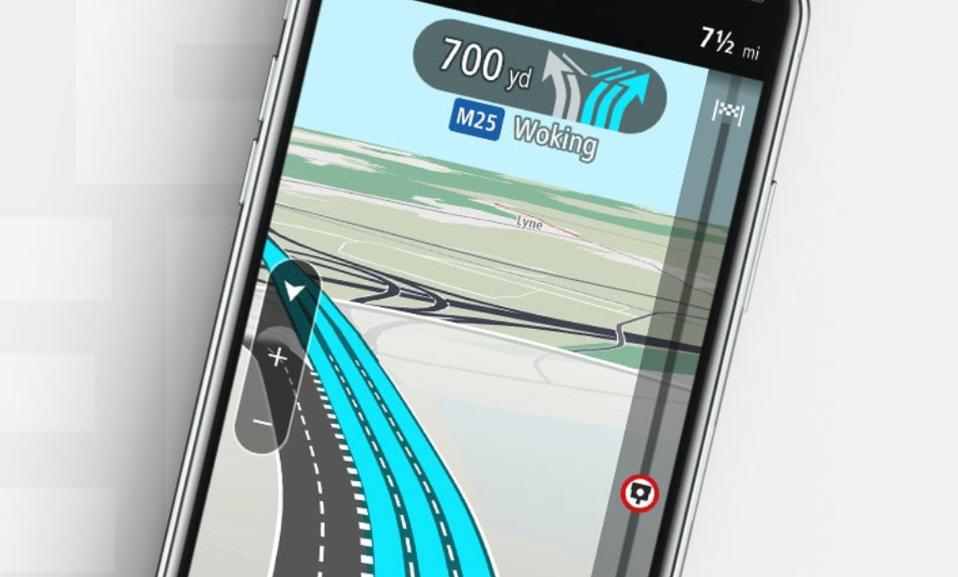
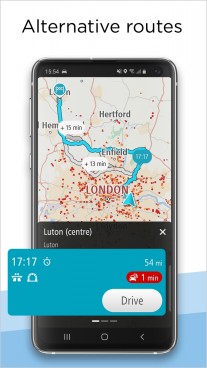
TomTom specialities include moving lane guidance which helps drivers navigate intersections by indicating which lane is best. You can also customize maps by adding or deleting regions as needed.

The only downside is that TomTom Go Navigation, unlike Here WeGo and indeed Google Maps, is not free. There’s a 30-day free trial, after which it costs $12.99 per year, $8.99 for six months or $1.99 per month.

This is not TomTom’s first collaboration with Huawei. The company uses TomTom’s mapping solution in its Huawei Mobile Services kits, which developers can use – ride-share apps need mapping kits, for example. Those are not accessible to consumers, of course, but this app, based on the same mapping, is.

Oh, and that’s not the end of the story. Huawei’s own Maps app is coming and is being developed in conjunction with TomTom. It Huawei gets it right, it could diminish the loyalty to Google Maps decisively.

You can, of course, use Google Maps already, through a web browser, but that’s hardly the same. You can even download the app on to Huawei phones, but its features are not as comprehensive. No, the big change will come with Huawei Maps, but this week’s TomTom Go Navigation addition is a very welcome arrival which works flawlessly and has the best mapping in the business.


Follow me on Instagram by clicking here: davidphelantech and Twitter: @davidphelan2009

MORE FROM FORBESForget Apple Watch Series 6: Apple Watch SE May Be Here In Days The Link Lonk


September 06, 2020 at 05:30AM
https://ift.tt/323BCEM

Huawei Finally Launches Brilliant Google Alternative - Forbes

https://ift.tt/3eIwkCL
Huawei

TIM CEO Says Not a Problem to Develop 5G Without Huawei - The New York Times

huawei.indah.link

CERNOBBIO, Italy — The head of Telecom Italia said on Saturday the former phone monopoly would have no trouble developing 5G infrastructure in Italy were the government to ban Chinese provider Huawei.

The U.S. government has urged allies to exclude Huawei from their next-generation communications infrastructure because it sees a risk the group could give China a strategic opening to spy on the West. Huawei rejects the charges.

Italy passed legislation last year giving the government special vetting powers over 5G supply deals between domestic firms and non-EU providers, including Huawei, but it has not gone as far as to ban the Chinese vendor.

Siding with Washington, Britain in July ordered telecoms operators to stop buying any 5G equipment from Huawei by the end of the year and demanded the network be purged of any existing gear from the Chinese provider by 2027.

Speaking to the media during the annual Ambrosetti forum on Lake Como, Telecom Italia (TIM) CEO Luigi Guibitosi ruled out a similar situation posing a challenge to TIM.

"If you're asking if I anticipate any problems were we to find ourselves in a situation like Britain's, the answer is no," Gubitosi said,

He said Huawei was just one of several providers TIM had, of which the main one was Sweden's Ericsson, while rivals Nokia and Huawei had a smaller role.

"We wouldn't have any trouble given time to manage the situation," he said.

In Germany, Deutsche Telekom has asked that no telecoms equipment vendor be barred, contrary to calls from some lawmakers to ban Huawei on national security grounds.

TIM in July left Huawei out of an invitation to tender for a contract to supply 5G equipment for core network infrastructure, where sensitive data is processed, in Italy and Brazil.

(Reporting by Valentina Za; Editing by Angus MacSwan)

The Link Lonk


September 05, 2020 at 11:00PM
https://ift.tt/2F6urTp

TIM CEO Says Not a Problem to Develop 5G Without Huawei - The New York Times

https://ift.tt/3eIwkCL
Huawei

TomTom releases navigation app on Huawei AppGallery - GSMArena.com news - GSMArena.com

huawei.indah.link

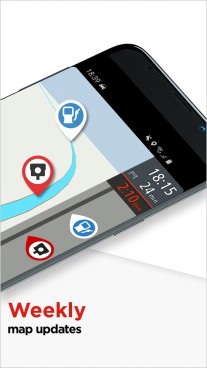
When US companies were ordered to stop working with Huawei, one of the apps that were dearly missed was Google Maps with its effortless navigation and mapping solutions. Today, the Chinese smartphone company finally has a viable alternative - TomTom released its own navigation app on Huawei AppGallery.

TomTom Go TomTom Go TomTom Go
TomTom GO Navigation app

It will be free for the first 30 days but then you have to pay either €1.99/month or €12.99/year if you want to continue using it after that.

TomTom signed a deal with Huawei back in January, and after a conversation with Huawei representatives, they confirmed the Dutch location technology company is working mainly on location and mapping tools and services.

It wasn’t ready to provide an alternative to Google Maps in time for the March release of Huawei P40 family but it was clear both companies were working hard to offer a more personalized experience for non-GMS phones.

TomTom Go TomTom Go TomTom Go
TomTom GO Navigation app

Starting the application for the first time requires downloading some maps for offline use. It also allows you to add Home and Work addresses, as well as other points of interest - something Google Maps cannot do on Huawei smartphones without GMS.

While TomTom Go does not bring integration with public services like mass transport or personalized recommendations for various activities, it has a more detailed map for navigation and is the often a better way to get yourself from Point A to Point B.

The Link Lonk


September 03, 2020 at 08:47PM
https://ift.tt/3lN4x88

TomTom releases navigation app on Huawei AppGallery - GSMArena.com news - GSMArena.com

https://ift.tt/3eIwkCL
Huawei

Huawei Confirms Dangerous New Switch To Russia - Forbes

huawei.indah.link

The Trump versus Huawei pantomime is now in full swing, and the latest news to emerge from the Chinese giant’s media machine is no less intended to find its mark than Trump’s far-from throwaway “Spywei” barb last month. With Washington’s warnings about the risks of election interference by America’s two most dangerous adversaries—Russia and China—continuing, what better time for Huawei to up the stakes. You’re pushing us into Russia’s arms, appears to be the message, you might want to think that through.

These are desperate times for Huawei. Trump’s latest attack has ripped the chipsets from Huawei’s supply chain that the company needs to power its flagship smartphones and 5G equipment. And while company execs assure that a plan is being worked on, that investments in the company’s own chipset development unit will be redoubled, that answers will be found, there’s been deafening silence from Shenzhen when it comes to any of the details as to what mitigating options the company still has.

And so to that timely reminder as to unintended consequences. Hong Kong’s South China Morning Post reports that Huawei CEO Ren Zhengfei dropped his Russia update during a recent visit to a Chinese university. “After the U.S. included us on the entity list,” he said, “we transferred our investment in the U.S. to Russia, increased Russian investment, expanded the Russian scientist team, and increased the salary of Russian scientists.” Russia and China have complementary technical skillsets but a traditional sense of mistrust between them. Those cracks are fast being papered over by an enemy’s enemy realpolitik, though, as opportunist Moscow senses a win-win.

Recommended For You

Russia has always figured in the shadows of the U.S. battle with Huawei. Last year, Vladimir Putin accused Washington of “brazenly forcing Huawei from the global market,” that, “it is even called the first technological war of the coming digital era.” Huawei sales have soared in Russia during its blacklist—albeit Samsung still outsells the Chinese giant. The loss of Google, it seems, has not had the same impact on Russian consumers as in Huawei’s other export markets.

One area on which Huawei is increasing its focus is cloud services. Its cloud business group appears to have escaped the impact of the latest chipset sanctions, and the high profits generated by such services will make for a much needed respite. Coincidentally, Huawei launched a major enterprise cloud offering in Russia back in March, further expanding its revenue base in Russia.

Huawei is also playing a pivotal role in Russia’s 5G deployments and Putin is clearly looking to China’s example as he adopts elements of the country’s Great Firewall. Much more dangerously for the west, though, Huawei is intent on expanding its AI capabilities with Russian talent. As I reported in February, the company is recruiting thousands of developers in the country.

You don’t need me to join the dots here. China’s Huawei is linking Chinese and Russian AI through commercial development programs. And while on the surface this can all be painted as business as usual, Huawei is also recruiting cybersecurity expertise in Russia, and has advertised for offensive as well as defensive cyber skillsets. When I asked about this earlier in the year, Huawei told me that cybersecurity is its highest priority, “we employ a qualified team of specialists worldwide to ensure the security of our products and services. That includes supporting our customers in Russia, as elsewhere.”

The most worrying scenario for Huawei is that it will need China to stand-up a silicon supply chain non-reliant on any U.S. tech—this will take years and Huawei won’t retain its current form until then. Its smartphone business will be irrevocably changed, its 5G business materially damaged. For its part, Huawei now says that it intends to invest in its own HiSilicon chipset development business to create a non-U.S. capacity of its own, within a few years from now.

Huawei analyst Dave Burstein suggests that, in reality, a Chinese chip maker will supply Huawei, regardless of American sanctions. “I think it highly unlikely the U.S. can prohibit a Chinese foundry from selling to a Chinese company in China,” he writes. “I’d expect any rational American regime to avoid raising the issue.” Given the level of those chipsets, this might fix its larger equipment issue, but not its smartphones.

It’s fairly obvious that a China program to establish new supply chains and technical capabilities would be stronger for the support of Russia’s own science and technology sectors. It’s also fairly obvious that in pushing a block rather than monitoring or regulation, the U.S. leaves Huawei will little choice but to go this different route.

“No matter what,” Ren said during that university visit, “we will never hate the U.S. It is only the impulse of some politicians, and does not represent American companies, American schools, and American society.” But with China and Russia representing the biggest cyber and physical security threat to the U.S., Huawei’s investments and increasing presence in Russia will do little to abate any concerns over the company’s risk factor and state links, even if a change in administration follows November’s election.

The Link Lonk


September 05, 2020 at 05:24PM
https://ift.tt/2Fbz8LW

Huawei Confirms Dangerous New Switch To Russia - Forbes

https://ift.tt/3eIwkCL
Huawei

Huawei determined to fight back as it remains fully invested in its European phones business - GSMArena.com news - GSMArena.com

huawei.indah.link

Huawei’s troubles with the United States have created troubled the company's sales in Europe as well, including countries like France and the United Kingdom suggesting their network providers stay away from the Chinese manufacturer.

During a keynote, part of IFA 2020, the president of the consumer business group in Europe Walter Ji highlighted the company’s role in European markets. In the same time, Huawei CEO Ren Zhengfei told investors that everyone working for the company is a “hero” and he doesn’t plan any layoffs to solidify their martyrship.

Screenshots of Walter Ji's keynote Screenshots of Walter Ji's keynote Screenshots of Walter Ji's keynote
Screenshots from Walter Ji's keynote

In a long 26-minute speech, Walter Ji reminded that Huawei directly employs 14,000 people in Europe and 200,000 more indirectly spanning over 23 research sites, making it the fifth-largest R&D investor in the European Union for 2019. By the end of 2020, Huawei plans to expand its offline presence with its own demo stores across France, Spain, Belgium, Italy, Germany, and the United Kingdom.

The executive also reiterated Huawei AppGallery is the third-largest app marketplace in the world, although he didn't comment on the gap to the top two - Google Play and App Store.

Huawei to fight back and remain fully invested in its mobile future in Europe

Ji did say that 5,000 apps are being added every month, and Huawei has a dedicated team that is working to bring the most popular apps from Google Play to its app store through the Petal Search engine.

Walter Ji concluded that Europe is a major market for Huawei and the company plans to remain a market leader in the next decade.

Source 1Source 2

The Link Lonk


September 04, 2020 at 07:01PM
https://ift.tt/31ZnVXq

Huawei determined to fight back as it remains fully invested in its European phones business - GSMArena.com news - GSMArena.com

https://ift.tt/3eIwkCL
Huawei
Friday, September 4, 2020

It will cost $1.8 billion to pull Huawei and ZTE out of US networks, FCC says - The Verge

huawei.indah.link

Removing Chinese equipment will cost small carriers as much as $1.8 billion, according to a new report from the Federal Communications Commission. The report estimates that as much as $1.6 billion of the cost would be eligible for federal reimbursement — but Congress has yet to appropriate the necessary funds.

Significant national security concerns have been raised about the use of Huawei and ZTE equipment in US networks — but many small carriers are still struggling with the cost of replacing it. In one instance, Eastern Oregon Telecom told The Verge that replacing the $500,000 of Huawei equipment was likely to cost as much as $1.5 million — a cost too high for the small carrier to shoulder on its own. Today’s report makes clear that story is all too common among US providers.

The FCC report looks specifically at carriers who receive support from the Universal Service Fund, meant to subsidize coverage of underserved areas. It does not cover all carriers in the US using Huawei or ZTE equipment, and there may also be eligible carriers who have yet to report their equipment. As a result, the total cost of replacing Chinese equipment is likely even higher than the reported $1.8 billion.

In June, the FCC officially designated Huawei and ZTE as risks to national security, forbidding telecoms from using federal subsidies to purchase their equipment going forward. But little has been done to remove the Huawei and ZTE equipment that is already in use, primarily because carriers can’t afford to do so without federal assistance.

Congress has yet to appropriate the money to pay for the replacement work, although it established a process for reimbursing carriers as part of the Secure and Trusted Communications Networks Act in March.

In a statement alongside the report, FCC Chairman Ajit Pai urged Congress to take action and allocate the necessary funds.

“By identifying the presence of insecure equipment and services in our networks, we can now work to ensure that these networks—especially those of small and rural carriers—rely on infrastructure from trusted vendors,” Pai said in a statement. “I once again strongly urge Congress to appropriate funding to reimburse carriers for replacing any equipment or services determined to be a national security threat.”

The Link Lonk


September 04, 2020 at 10:56PM
https://ift.tt/2GyYZOB

It will cost $1.8 billion to pull Huawei and ZTE out of US networks, FCC says - The Verge

https://ift.tt/3eIwkCL
Huawei

Qualcomm’s Founder On Why the US Doesn’t Have Its Own Huawei - WIRED

huawei.indah.link

At the time, the existing contenders for a wireless standard had limits on how many conversations they could handle, and Jacobs was considering a better alternative called Code Division Multiple Access, or CDMA. It was a concept whose roots went back to 1940, when the actress Hedy Lamarr and a colleague pondered the idea of using multiple frequencies to send a single message. One day, on a ride down Oceanside Drive from Los Angeles to his San Diego home, Jacobs realized that CDMA might be a superior mobile wireless standard, with much more potential capacity. He quickly put his teams to work applying the concepts to actual technology, and, of course, patenting their innovations.

At the time, of course, nobody really understood that a wireless standard would become a stratum for the entire modern world. It would be like inventing food. As Jacobs tells it, he outlined his standard at a meeting of the major wireless communications industry group, the CTIA. “There were about, I don't know, 100 people,” he says “We did a slide show—why we thought we'd solved the problems, where it was advantageous. Nobody found an error in it. But nobody jumped on board, either.”

The next few years became known as the “Holy Wars of Wireless,” as Jacobs and his team tried to get CDMA accepted as viable tech inside wireless devices. To help prove its superiority, Qualcomm had to develop chips and build a commercial phone and base station.

“To do that, obviously, it's going to take a lot of money and time,” he says. “Some of the operators [like ATT] were convinced that this was worth pursuing, so I asked them to convince the manufacturers to take a license from us, and came up with this approach: You'll pay us an upfront fee, which we'll use for R&D. Should this ever be commercial, which nobody really thought would probably happen, there'll be a small royalty on each device sold. That's how the licensing aspect actually got set up.”

At first, Qualcomm manufactured its own phone headsets, selling them in Asia. That was around the time it went public in 1991. Eventually, though, it sold off those parts of the business and became strictly an under-the-hood company.

This decision wound up having implications in the current competition between the US and China, particularly with the telecom giant Huawei. Because of security concerns, the US is currently doing all it can to stifle adoption of Huawei’s products. All of this might be easier if there were an American equivalent to Huawei—a company working to pioneer the infrastructure of the next generation of wireless that also sold products directly to people. (In this case, that next generation is the much anticipated 5G standard.) Why didn’t Qualcomm pursue that?

“We did think about that, but we wanted CDMA to go worldwide,” says Jacobs. He says that Qualcomm was still fighting its Holy War, trying to get CDMA accepted everywhere. Being a competitor to carriers would impede that. In 1993, the strategy paid off, when CDMA became the wireless standard. Jacobs says he thought that other US companies, like Motorola, would stay in the business. But one by one, they either shut down or sold out to foreign companies. Qualcomm, by selling companies a comprehensive chipset that could power a cellphone, actually made it easier for new Chinese competitors to hit the market, because they had the tools to create a product instantly. “Unfortunately,” he says, “nobody in the US has really run with it" and done the same thing.

Another complicating factor is that governments in China and Europe have had industrial aid policies that helped their telecom firms in a way that the US has not. “Our government has not provided R&D support or other support that Huawei and ZTE (another successful Chinese firm) managed to get from their own government,” Jacobs says.

The Link Lonk


September 04, 2020 at 08:00PM
https://ift.tt/32VjbkZ

Qualcomm’s Founder On Why the US Doesn’t Have Its Own Huawei - WIRED

https://ift.tt/3eIwkCL
Huawei

Featured Post

Huawei lawyers claim emails prove US has no grounds to extradite CFO from Canada - The Guardian

huawei.indah.link US justice department’s battle to extradite Meng Wanzhou from Canada has taken a fresh turn as lawyers for Huawei’s chie...

Popular Posts